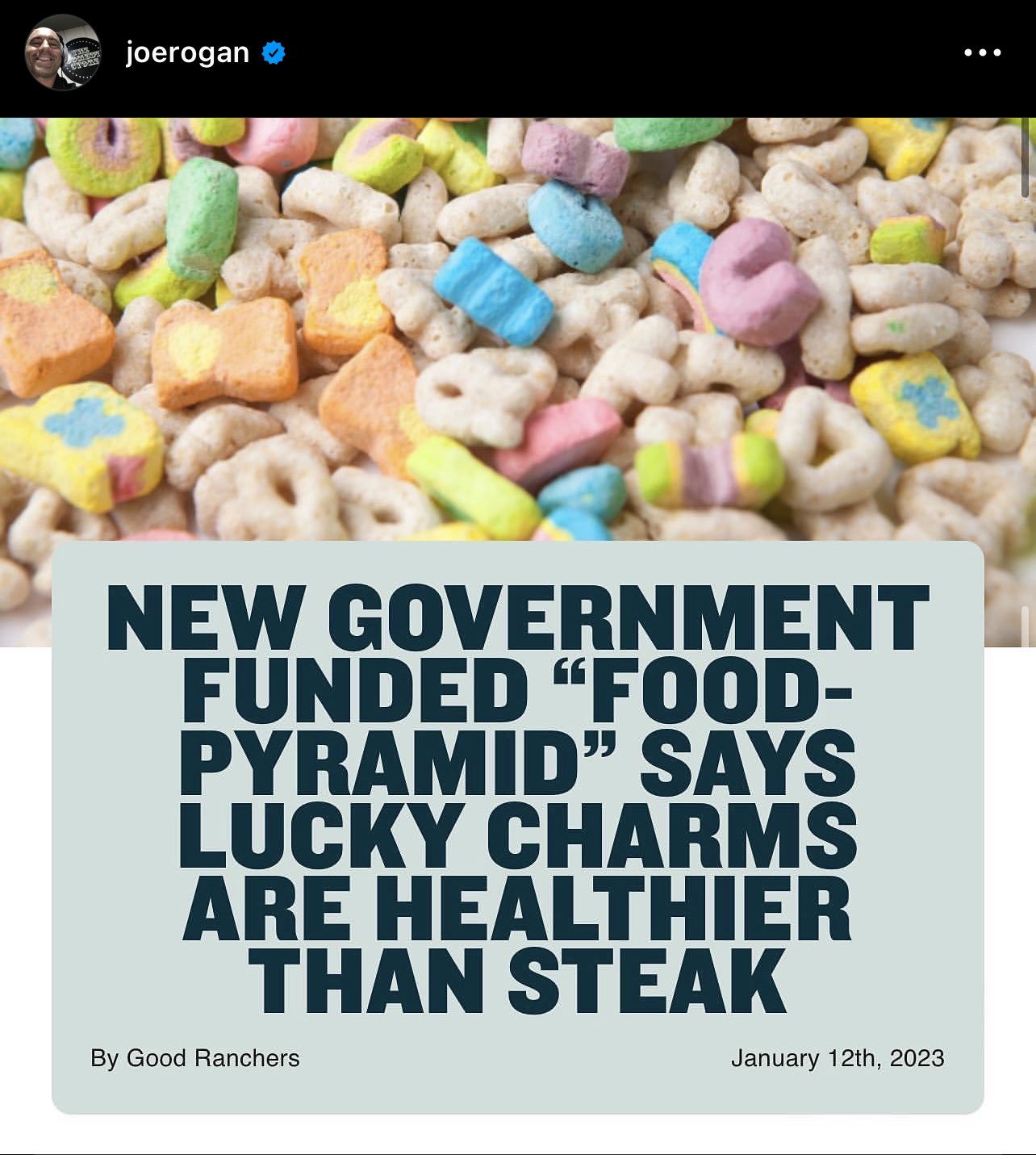
As you might have seen, my TrueMed co-founder Justin and I have been calling attention to the recent NIH-funded nutrition study that said Lucky Charms are healthier than eggs and beef. This culminated in nightly scrutiny of the study on major networks and Joe Rogan linking to our content in a post with over 900,000 likes.
The efforts paid off – the stated goal of the study was to impact children’s nutrition guidelines and marketing. The plan was to put these scores on labels to guide purchasing decisions. Due to our promotion, efforts to put “highly encouraged” labels on orange juice and processed cereals were delayed. Because the study’s guidelines are so disastrous, this will save lives.
The study’s lead author recently called me from his trip to Davos to defend the study. He said he was getting hundreds of angry emails because of the news coverage – to which I replied that 25% of children have pre-diabetes because of a rigged system, so it’s understandable why people are frustrated.
He seems like a dedicated professional who has produced hundreds of nutrition studies. But my thesis is that the incentives of our food system are larger than any one person, and they are hurting all of us.
I want to speak facts. The fact is that this prominent nutrition researcher made the following points to me in our conversation. He said:
- Lucky Charms and Cheerios are highly nutritious – and it is correct to rate these highly processed grains at the same level as whole grains like quinoa.
- For children, orange juice (24g of sugar per 8oz serving) should be encouraged daily.
- It was classist to expect low-income people to eat whole food. The best we could do is “expect people to eat processed food that is more healthy.”
- Despite receiving funding from processed food companies, these financial conflicts did not impact the results – even though chocolate almond milk (which Danone, a chief funder of the study, makes) is the highest-rated dairy product (above Greek yogurt). He also said that the fact that he receives personal payments from food and pharmaceutical companies does not slant research. He said food companies did not expect anything in return for the millions of dollars they’ve given to his research.
When I consulted for food companies early in my career, we funded nutrition researchers to create more studies that would confuse Americans. I am sure the researchers are well-intentioned and dedicated, but each new nutrition study serves the purpose of further confusion.
The more I dig into this issue, the more I am convinced one of the essential principles in health is that it is simpler than we are led to believe:
- Avoid sugar
- Avoid seed oils
- Avoid highly processed grains
- Stick to whole foods
We should build our policies and decisions around these simple principles. And resist the current system, designed to confuse and gaslight us.
If this article resonates with you, sign up for the email below. I’ll send one weekly email on the incentives/systemic problems with healthcare and one with practical tips that impacted me.
 Calley Means