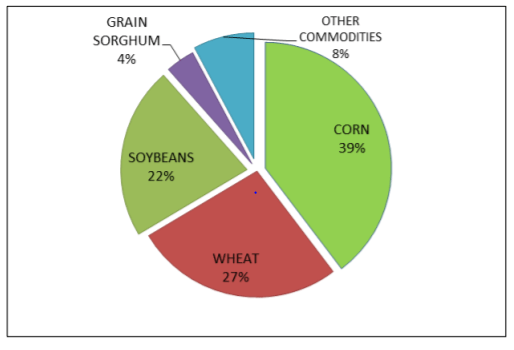
Fact of the day: 88% of U.S. agriculture subsidies go to the 3 grains that are the foundation of processed food: corn, wheat, and soy.
Less than 0.5% of subsidies go to fruit or vegetables.
Like seed oils, highly processed grains didn’t exist until the early 1900s. Today, they are a cornerstone of our diet.
So, what happened to grains in the last 100 years?
The “refining” process (which almost all grains we now experience) involves removing the fibrous bran from the grain. Removing the bran extends shelf life since fat stored in the germ can spoil quickly. This also creates a soft, chewy texture.
Grains are carbohydrates that convert to sugar in the blood. But by altering the grains, the carbohydrates can be broken down more quickly when digested – which translates to increased blood glucose levels sooner after eating. Fiber helps slow the body’s breakdown of starches into glucose, helping keep blood sugar stable – but the “refining” removes this element.
It is not lost on food manufacturers that sugar is addictive, and processed grains are another way food is weaponized to get more glucose into your bloodstream.
Most of these processed grains are mixed with other unhealthy ingredients (such as sugar and seed oils), contributing only to health problems.
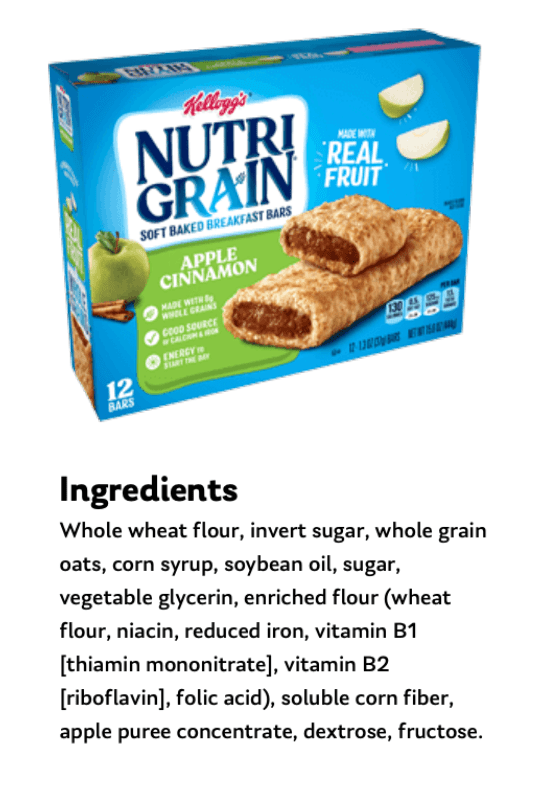
Below are the ingredients for Nutrigrain bars, which are marketed as healthy. Notice the top ingredients include three grains (Whole wheat flour, whole grain, enriched flour), SIX types of sugar (inverted sugar, corn syrup, sugar, vegetable glycerin, dextrose, and fructose), and soybean oil (the most popular seed oil).
It is shocking how many foods – even ones we assume are healthy – follow this formula. Look at the label of your favorite food with a “plant-based” label, and you’ll likely see the same toxic ingredient combo:
Alternatives to grains include broccoli rice, cauliflower rice, and grain-free pasta (like Banza). Alternatives to traditional ultra-refined grains like white flour and wheat flour are coconut flour, chickpea flour, cassava flour, and almond flour.
If this article resonates with you, sign up for the email below. I’ll send one weekly email on the incentives/systemic problems with healthcare and one with practical tips that impacted me.
 Calley Means