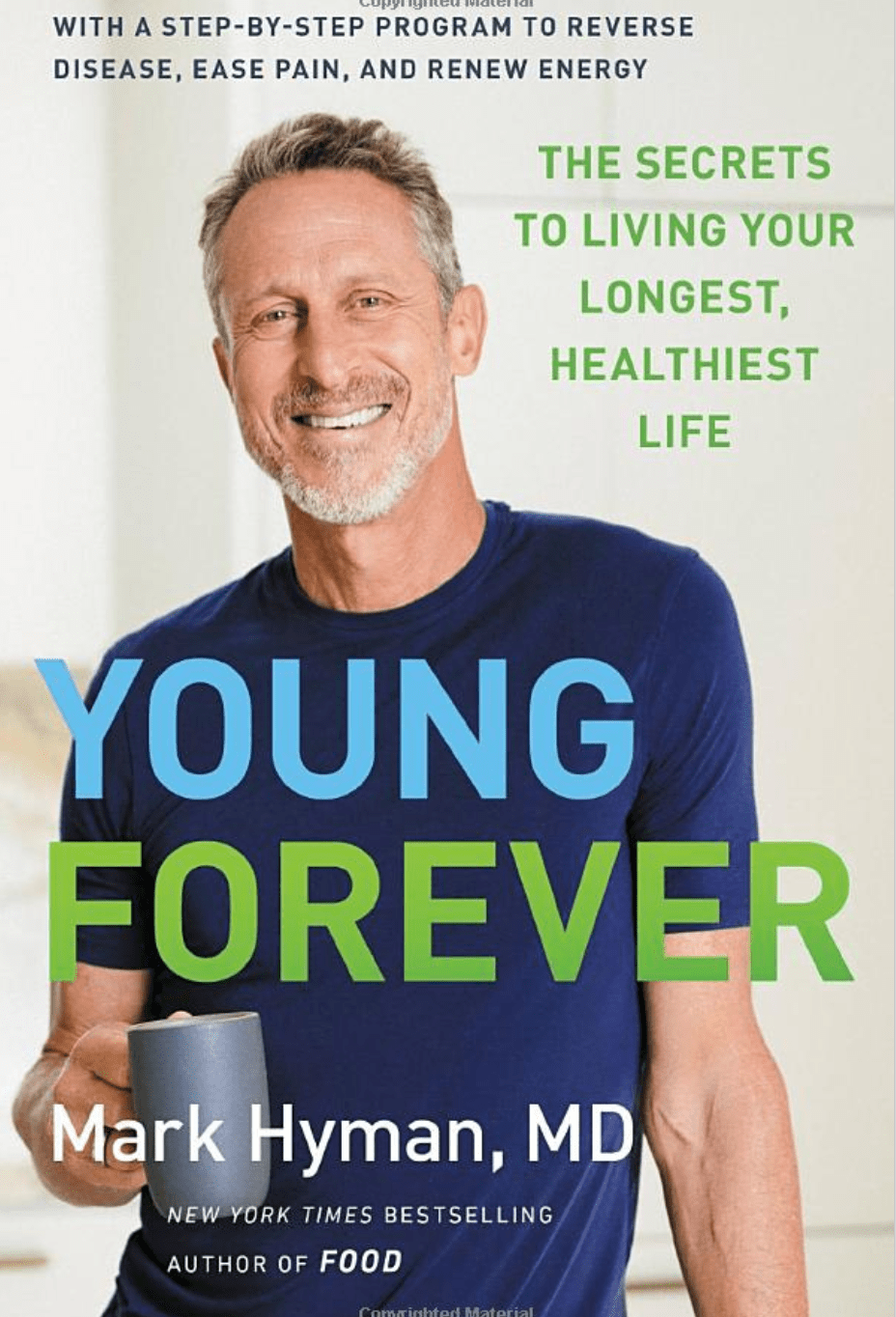
As discussed in the last blog, I think the new Mark Hyman book Young Forever is one of the best primers on how to shift to a “functional medicine” view of health. Mark’s framework should be the basis of healthcare policy (shifting from a view that sees diseases as isolated issues to realizing they are connected). Still, until then, this book is loaded with tips on personal responsibility.
Below are the last five principles of aging – which hit on universal principles for health. If this resonates, you can order the book here,
5 More Hallmarks of Aging (Written from an email by Mark Hyman)
Hallmark 6: Senescent Cells
Typically, when cells become old or damaged, they go through programmed cell death, a process called apoptosis. This vital process helps clean or recycle the old junk to make new, fresh cells. However, sometimes cells just don’t die. We call this cellular senescence or zombie cells. Cell senescence occurs naturally and increases as we age. Still, it can also increase from lifestyle factors such as a high-starch and sugar diet, excess stress, exposure to toxic chemicals, and more. (Luckily, we can mitigate most of these!)
Over time, these zombie cells wander our bodies, secreting pro-inflammatory cytokines that can begin to cause damage to nearby cells and contribute to things like high blood pressure, diabetes, and dementia. In fact, cellular senescence can accelerate nearly every age-related disease.
One of the best ways to combat zombie cells is to engage in periodic fasting. Fasting deactivates mTOR, a requirement for autophagy, and activates SIRT1, a gene that prevents cells from turning into zombies in the first place.
Exercise is another great option when it comes to fighting senescent cells. Resistance exercise causes slight tears in the muscle tissue, which is why you might feel sore the day after lifting weights. Heavily working muscle groups cause muscle breakdown and inflammation. In response, immune cells migrate to the site where repair is needed, wiping away zombie cells while at it.
Hallmark 7: Depleted Energy
Mitochondria are organelles found in literally every cell in your body. You probably remember your middle school science teacher referring to them as the cell’s “powerhouse”—because that is exactly what they are. They generate most of the energy your body needs to function.
As we age, however, mitochondrial DNA mutations accumulate, free radicals increase, and mitochondria drop in number and functioning, especially as we lose muscle. This leads to an overall decline in energy as we get older.
But there is a lot you can do to support healthy mitochondria and reverse age-related energy decline. These include:
- Focusing on eating a healthy diet. Include many antioxidants, healthy fats like avocados and olive oil, moderate protein, and plenty of micronutrients.
- Practicing calorie restrictions like time-restricted eating or intermittent fasting. These practices act as stress signals for your body that trigger healthy adaptations like eliminating damaged cells and producing new mitochondria.
- Regulate your light exposure. Turn off screens and devices leading up to bedtime, and prioritize getting light exposure first thing in the morning—and natural sunlight if you can.
- Develop an exercise routine that includes high-intensity interval training and strength training. Small or big, any addition of movement into your current routine can do your mitochondria good.
- Use supplements. The foods you eat today are not as nutrient-dense as they once were. Even with the perfect diet, you may be lacking in certain nutrients. Working with your doctor to add supplements like Ubiquinol (CoQ10), Resveratrol, and L-carnitine to your daily regimen can help promote healthy mitochondria.
Hallmark 8: Poor Gut Health
Over 1,500 years ago, Hippocrates—known today as the “father of medicine”—said that “all diseases begin in the gut.” With the advances in science and medicine, we have at our fingertips today, we’ve confirmed his suspicion: many metabolic and chronic conditions can and do arise from unhealthy gut microbiomes.
The microbes in your gut have many important roles, but one of the most important when it comes to longevity is preserving your gut lining. Unfortunately, things in our modern lifestyle and diets can damage our gut lining and destroy our beneficial bacteria. This is a big problem because a damaged gut lining can allow toxins, unwanted substances, harmful bacteria or viruses, and other particles into your bloodstream that would otherwise be neutralized and discarded as waste. We call this “leaky gut.”
Leaky gut has been associated with nearly every chronic condition, and it’s quite likely that it affects nearly every one of us to some degree. That’s the bad news—but the good news is it’s in our power to change for the better. For example, you can reduce or eliminate things that damage your gut from your diet—what I call “biome-busters.” These include alcohol, sugar, and gluten.
On the other end of the spectrum are what I call “biome-builders”: gut-healing foods your good bugs love. You can promote healthy “good” gut bacteria by working on adding foods like fiber, veggies, prebiotics, and probiotics to your diet.
Hallmark 9: Stem Cell Exhaustion
We are all familiar with how stem cells work, even if we don’t realize it. How does your skin heal after a cut? Stem cells are recruited and secrete healing and growth factors that trigger your body into repair and renewal. It’s miraculous. Starfish and salamanders can grow new limbs. Even our own livers can grow back after 90 percent has been removed.
We produce stem cells everywhere in our tissues and in our bone marrow. But as we age, our stem cells age too. They become less able to repair and renew our cells, tissues, and organs.
As with all other hallmarks of aging, the decline in our stem cell function is largely caused by our exposome—our diet, exercise, sleep, stress, environmental toxins, allergens, and microbes, all things we have control over. Exciting innovations in regenerative medicine—including stem cell therapy and plasma rejuvenation, can help us address the aging of our stem cells. But with the right exposome modifications available, they may not even be necessary.
Hallmark 10: Inflammaging
All the other hallmarks play a role in this final hallmark of aging: a dysfunction in immune functioning called inflammaging.
As a Functional Medicine doctor, I often consider myself an “inflammologist.” The key is not to shut down the inflammation or the inflammatory response but to balance inflammation (some inflammation is good!) by removing the root causes.
The primary driver is our modern diet. It is pro-inflammatory, high in sugar and starch, low in fiber, awash in refined oils, nutrient-poor, and phytonutrient-depleted. In other words, it’s a perfect recipe for disease, inflammation, and aging. This diet also harms our microbiome, driving leaky gut. Since most of our immune system is in the gut, this greatly contributes to inflammation.
Add to that a load of manmade chemicals in our food, water, air, and household cleaning and personal care products, our exposure to mercury in fish and dental fillings, lead in the environment from leaded gas (still in our soil), and leaded paint, heavy metals and particulate pollution from coal-burning plants, and arsenic in food and water, and we have a perfect storm for inflammation. Even psychological stress and lack of sleep, a product of our overworked, under-loved culture, drives inflammation.
The good news is that limiting inflammation and activating our anti-inflammatory pathways is not hard to do. By following an anti-inflammatory diet, activating the longevity switches with time-restricted eating and phytochemicals, using hormesis (“good” stress) to activate our body’s innate healing systems, exercising, reducing stress, getting good sleep, avoiding and eliminating environmental toxins, and optimizing our microbiome, we can create the optimal environment for our bodies to survive and thrive.
If this article resonates with you, sign up for the email below. I’ll send one weekly email on the incentives/systemic problems with healthcare and one with practical tips that impacted me.
 Calley Means