Should You Go Down the Road?

Happy Friday. I’ve been getting a lot of questions along the lines of “What if I [or my parents] are told by the doctor that I’m at risk for heart disease or diabetes? Should I not take the drugs?

This email isn’t a “100% anti-drug” mindset, but I do recommend several steps before embarking on a chronic disease drug plan: 

  1. Realize that specific lifestyle interventions (which you probably won’t hear about from your doctor) are almost always more effective than drugs. The graph above is a study about reversing diabetes
  2. Get a second opinion from a functional medicine doctor. Search for one here
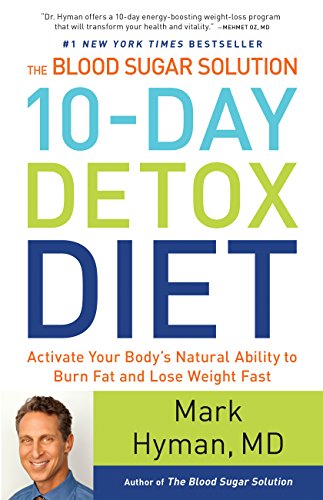
  3. Read The Blood Sugar Solution by Mark Hyman

If this article resonates with you, sign up for the email below. I’ll send one weekly email on the incentives/systemic problems with healthcare and one with practical tips that impacted me.

Processing…
Success! You're on the list.

The Child is the Father of the Man

As a new parent, there’s so much talk about how to most effectively teach children. But we don’t talk enough about how much we need to learn from babies: 

  • They are learning machines through curiosity and play – they learn to walk and talk with no guidebooks! But we quickly sit them at desks and tell them to quiet down and follow the rules at school. 
  • They are movement machines and love to be outside, but we keep them inside and incentivize them to be sedentary. 
  • They are predisposed to natural food and can regulate their appetite. Still, we follow guidance to give them processed, nutrient-deprived food that damages their cells starting at six months. We feed their cells with drugs. 
  • They, quite literally, see their mother as a god-like figure. But we systematically delegitimize motherhood as a society. 
  • They are born with awe and love for the world, but we almost immediately thrust the psychosis of adults on them. 

Children are truly the fathers of adults – there is nothing more to society than ensuring their natural inclinations thrive. The foundation of public policy in this country should be how we can learn from kids and incentivize their natural inclinations to eat healthy, sleep, move, and manage their stress. Instead, we almost systematically do the opposite. 

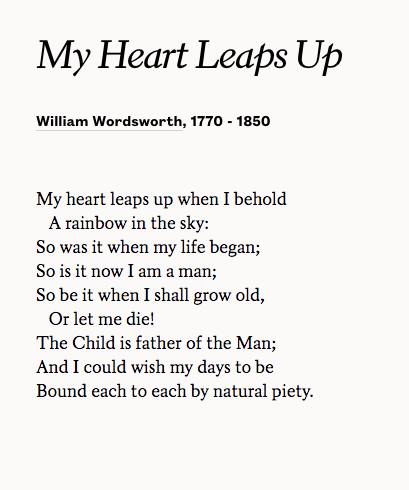
This insight is not new. I was moved by this poem from 1803, which begs the question of when society robs our awe of simple things like rainbows. The future of our society can be predicted by what is currently happening to our kids’ brains. And we need a course correction. 


If this article resonates with you, sign up for the email below. I’ll send one weekly email on the incentives/systemic problems with healthcare and one with practical tips that impacted me.

Processing…
Success! You're on the list.

Sit Under a Tree

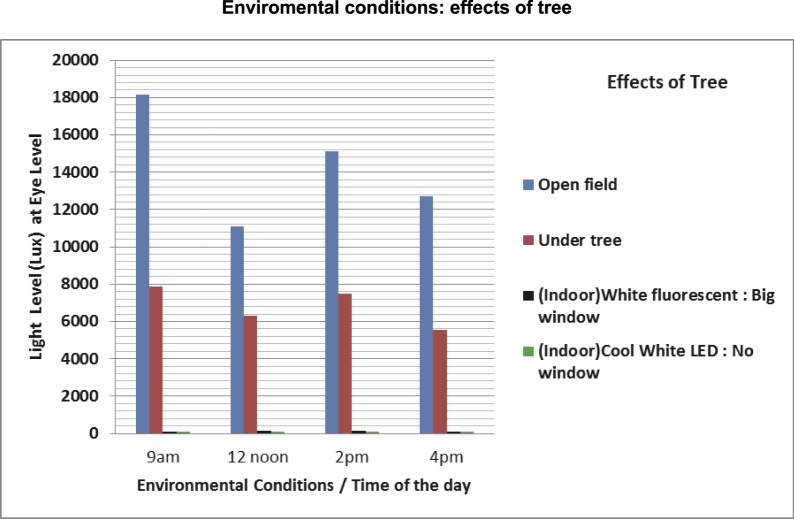
The amount of light a human is exposed to outside is 116 times more than inside with artificial light. Even sitting under a tree, a human is exposed to 50 times more light than sitting inside with artificial light. And again, for most of human history, there was no “inside” or artificial light. For almost the entirety of evolution, our eyes received almost zero light when the sun was down and significantly more when the sun was up. We have photoreceptors (light-sensitive cells) in our retinas that receive, are stimulated by, and react to a particle of sunlight. When photons enter the eye, they help regulate stress, energy levels, and hunger for the day. If you put any animal in a cage with processed food and low sunlight, they will quickly go crazy. I am increasingly beginning to think this is happening to us at scale. I have always been an inside person, but I am trying to get me (and my son) outside every morning. 


If this article resonates with you, sign up for the email below. I’ll send one weekly email on the incentives/systemic problems with healthcare and one with practical tips that impacted me.

Processing…
Success! You're on the list.

Deadly Lightbulbs

I’ve been diving deep into the science of circadian rhythm for the book I’m writing with my sister. I’ve always thought this was a relatively frivolous concept, but this opinion has dramatically changed:

Humans have evolved for millions of years, but we have only had lightbulbs for 140.

Over these millions of years, a rhythm has been coded into our cells – highly tied to the sun. It was pitch dark when the sun went down, and we went to sleep. This is how we evolved and why our bodies run on a 24-hour clock. 

Railroads were popularized just 120 years ago. Air travel was just 65 years ago, so the idea of people traveling out of their time zone is new. 99.99% of humans who lived on this earth went to bed simultaneously in a similar geographic location throughout their lives. 

We have systematically decimated the schedule that the miraculous machines of our bodies are encoded to run on – and then throw up our hands in confusion as to the reasons why so many people experience fatigue, insomnia, brain fog, sluggishness, or anxiety. 

I’m not suggesting we go back to the stone age and ban artificial light or phone screens. For that matter, I’m not suggesting we ban all drugs. But I think we as a society step back and appreciate how evolutionarily disruptive these inventions are… how important our evolutionarily ingrained circadian rhythms are to our health and happiness. 


If this article resonates with you, sign up for the email below. I’ll send one weekly email on the incentives/systemic problems with healthcare and one with practical tips that impacted me.

Processing…
Success! You're on the list.

Young Forever II

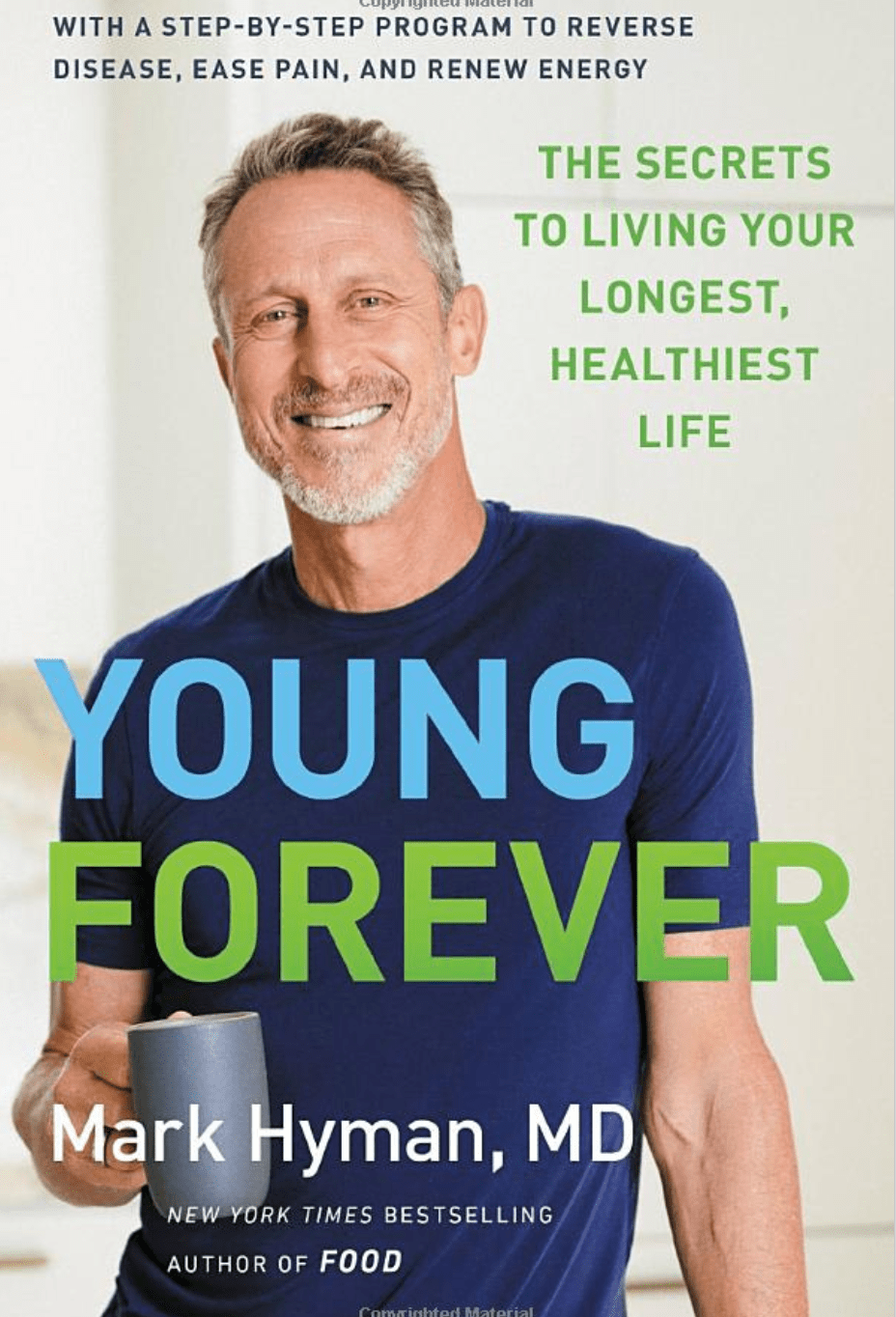
As discussed in the last blog, I think the new Mark Hyman book Young Forever is one of the best primers on how to shift to a “functional medicine” view of health. Mark’s framework should be the basis of healthcare policy (shifting from a view that sees diseases as isolated issues to realizing they are connected). Still, until then, this book is loaded with tips on personal responsibility. 

Below are the last five principles of aging – which hit on universal principles for health. If this resonates, you can order the book here,

5 More Hallmarks of Aging (Written from an email by Mark Hyman)

Hallmark 6: Senescent Cells

Typically, when cells become old or damaged, they go through programmed cell death, a process called apoptosis. This vital process helps clean or recycle the old junk to make new, fresh cells. However, sometimes cells just don’t die. We call this cellular senescence or zombie cells. Cell senescence occurs naturally and increases as we age. Still, it can also increase from lifestyle factors such as a high-starch and sugar diet, excess stress, exposure to toxic chemicals, and more. (Luckily, we can mitigate most of these!)

Over time, these zombie cells wander our bodies, secreting pro-inflammatory cytokines that can begin to cause damage to nearby cells and contribute to things like high blood pressure, diabetes, and dementia. In fact, cellular senescence can accelerate nearly every age-related disease.

One of the best ways to combat zombie cells is to engage in periodic fasting. Fasting deactivates mTOR, a requirement for autophagy, and activates SIRT1, a gene that prevents cells from turning into zombies in the first place.

Exercise is another great option when it comes to fighting senescent cells. Resistance exercise causes slight tears in the muscle tissue, which is why you might feel sore the day after lifting weights. Heavily working muscle groups cause muscle breakdown and inflammation. In response, immune cells migrate to the site where repair is needed, wiping away zombie cells while at it.

Hallmark 7: Depleted Energy

Mitochondria are organelles found in literally every cell in your body. You probably remember your middle school science teacher referring to them as the cell’s “powerhouse”—because that is exactly what they are. They generate most of the energy your body needs to function.

As we age, however, mitochondrial DNA mutations accumulate, free radicals increase, and mitochondria drop in number and functioning, especially as we lose muscle. This leads to an overall decline in energy as we get older.

But there is a lot you can do to support healthy mitochondria and reverse age-related energy decline. These include:

  • Focusing on eating a healthy diet. Include many antioxidants, healthy fats like avocados and olive oil, moderate protein, and plenty of micronutrients.
  • Practicing calorie restrictions like time-restricted eating or intermittent fasting. These practices act as stress signals for your body that trigger healthy adaptations like eliminating damaged cells and producing new mitochondria.
  • Regulate your light exposure. Turn off screens and devices leading up to bedtime, and prioritize getting light exposure first thing in the morning—and natural sunlight if you can. 
  • Develop an exercise routine that includes high-intensity interval training and strength training. Small or big, any addition of movement into your current routine can do your mitochondria good.
  • Use supplements. The foods you eat today are not as nutrient-dense as they once were. Even with the perfect diet, you may be lacking in certain nutrients. Working with your doctor to add supplements like Ubiquinol (CoQ10), Resveratrol, and L-carnitine to your daily regimen can help promote healthy mitochondria. 

Hallmark 8: Poor Gut Health

Over 1,500 years ago, Hippocrates—known today as the “father of medicine”—said that “all diseases begin in the gut.” With the advances in science and medicine, we have at our fingertips today, we’ve confirmed his suspicion: many metabolic and chronic conditions can and do arise from unhealthy gut microbiomes. 

The microbes in your gut have many important roles, but one of the most important when it comes to longevity is preserving your gut lining. Unfortunately, things in our modern lifestyle and diets can damage our gut lining and destroy our beneficial bacteria. This is a big problem because a damaged gut lining can allow toxins, unwanted substances, harmful bacteria or viruses, and other particles into your bloodstream that would otherwise be neutralized and discarded as waste. We call this “leaky gut.” 

Leaky gut has been associated with nearly every chronic condition, and it’s quite likely that it affects nearly every one of us to some degree. That’s the bad news—but the good news is it’s in our power to change for the better. For example, you can reduce or eliminate things that damage your gut from your diet—what I call “biome-busters.” These include alcohol, sugar, and gluten.

On the other end of the spectrum are what I call “biome-builders”: gut-healing foods your good bugs love. You can promote healthy “good” gut bacteria by working on adding foods like fiber, veggies, prebiotics, and probiotics to your diet.

Hallmark 9: Stem Cell Exhaustion

We are all familiar with how stem cells work, even if we don’t realize it. How does your skin heal after a cut? Stem cells are recruited and secrete healing and growth factors that trigger your body into repair and renewal. It’s miraculous. Starfish and salamanders can grow new limbs. Even our own livers can grow back after 90 percent has been removed.

We produce stem cells everywhere in our tissues and in our bone marrow. But as we age, our stem cells age too. They become less able to repair and renew our cells, tissues, and organs.

As with all other hallmarks of aging, the decline in our stem cell function is largely caused by our exposome—our diet, exercise, sleep, stress, environmental toxins, allergens, and microbes, all things we have control over. Exciting innovations in regenerative medicine—including stem cell therapy and plasma rejuvenation, can help us address the aging of our stem cells. But with the right exposome modifications available, they may not even be necessary.

Hallmark 10: Inflammaging

All the other hallmarks play a role in this final hallmark of aging: a dysfunction in immune functioning called inflammaging.

As a Functional Medicine doctor, I often consider myself an “inflammologist.” The key is not to shut down the inflammation or the inflammatory response but to balance inflammation (some inflammation is good!) by removing the root causes. 

The primary driver is our modern diet. It is pro-inflammatory, high in sugar and starch, low in fiber, awash in refined oils, nutrient-poor, and phytonutrient-depleted. In other words, it’s a perfect recipe for disease, inflammation, and aging. This diet also harms our microbiome, driving leaky gut. Since most of our immune system is in the gut, this greatly contributes to inflammation. 

Add to that a load of manmade chemicals in our food, water, air, and household cleaning and personal care products, our exposure to mercury in fish and dental fillings, lead in the environment from leaded gas (still in our soil), and leaded paint, heavy metals and particulate pollution from coal-burning plants, and arsenic in food and water, and we have a perfect storm for inflammation. Even psychological stress and lack of sleep, a product of our overworked, under-loved culture, drives inflammation.

The good news is that limiting inflammation and activating our anti-inflammatory pathways is not hard to do. By following an anti-inflammatory diet, activating the longevity switches with time-restricted eating and phytochemicals, using hormesis (“good” stress) to activate our body’s innate healing systems, exercising, reducing stress, getting good sleep, avoiding and eliminating environmental toxins, and optimizing our microbiome, we can create the optimal environment for our bodies to survive and thrive.


If this article resonates with you, sign up for the email below. I’ll send one weekly email on the incentives/systemic problems with healthcare and one with practical tips that impacted me.

Processing…
Success! You're on the list.

Young Forever

As you probably know from reading this email, I believe Mark Hyman is indispensable in this movement to put food and metabolic habits at the center of health.

His books (he has 14x bestsellers) have changed my life.

He has a new book out today called Young Forever. It focuses on longevity – which inevitably covers general principles on improving health for you and your family / feeling better today. I got an advance copy of this book, and a few resources are more digestible and contain a greater number of life-saving tips. 

I’ve included below a sneak peek (5 hallmarks of aging that Dr. Hyman created) below. I’ll have the second five tomorrow. If this resonates, you can order the book here,

5 Hallmarks of Aging (Written from an email by Mark Hyman)

Hallmark 1: Disrupted Hormone and Nutrient Signaling 

Years ago, I attended a longevity conference that brought together leading researchers in aging. I met Lenny Guarente, the MIT scientist who demonstrated dramatic life extension in mice, even without calorie restriction. On the way to a talk, I asked him about the causes of aging. He simply said, “Sugar!”

Our bodies have exquisite mechanisms for sampling the environment and sensing nutrient levels—amino acids, sugars, and fatty acids. From moment to moment, they modify a myriad of chemical reactions that trigger either autophagy—the process of cellular recycling and cleanup—or protein synthesis—making new proteins and parts. But how do our bodies know what to do?

We have four key nutrient-sensing systems that work together, with overlapping redundancies designed to beautifully protect us from disease and abnormal aging: insulin and insulin signaling, mTOR, AMPK, and sirtuins. Most of the dietary and lifestyle strategies that prevent disease, promote health and extend life work through these nutrient-sensing systems.

One of the keys to optimizing these systems is to give your body a break from the constant influx of calories on a regular basis through fasting—thus activating autophagy. In addition, it’s important to ensure a high-quality nutrient intake that is low in sugar and starch, high in good fats and phytochemical-rich vegetables and fruit, and high in quality protein; this activates protein synthesis. Regular exercise also activates autophagy. 

Hallmark 2: DNA Damage and Mutations

Damage to our DNA is another hallmark of aging. Each day, our DNA gets up to 100,000 little hits. The accumulation of these insults accelerates aging. Thankfully, we have built-in repair systems that seek out damaged DNA and fix it. But even if 99 percent of damage is reversed, the remaining 1 percent accumulates over our lifetime. 

Our cells also divide, which means re-creating each cell’s DNA blueprint. Over your lifetime, your DNA produces 10 quadrillion copies of itself through cell division. Sometimes, there are glitches in the copy machine, and our DNA blueprint is reproduced with these glitches.

What can be done about this? First, you can avoid DNA-damaging insults. This means reducing or eliminating the inputs that beat up your DNA. These include processed foods, environmental toxins, and UV radiation. Second, you can activate your DNA repair systems. I cover this in greater detail in my new book, Young Forever, which you can preorder here.

Hallmark 3: Telomere Shortening

Our telomeres, the little caps at the end of our chromosomes, shorten as we age. Eventually, they can’t hold the tightly protected DNA double helix to prevent it from unraveling. Each time cells replicate, the caps are removed so the DNA can be read, but the telomere shortens until the cell stops dividing or commits programmed cell death (also known as apoptosis). This is a normal consequence of cell division. The longer our telomeres, the more years of healthy DNA replication we have. The shorter they are, the shorter our life. Also, sometimes the cells don’t die but turn into zombie cells (see Hallmark 6 in next week’s newsletter), spewing out inflammatory compounds that accelerate aging.

The good news is that we have tremendous influence over our telomeres. The usual lifestyle transgressions shorten them—our toxic, processed diet, sugar, environmental toxins, sedentary lifestyle, and psychological stress. Shorter telomeres are linked to all aging problems and increase the risk of gray hair, heart disease, cancer, immune dysfunction, and more. A whole-foods, phytonutrient-rich diet, exercise, meditation, sleep, love, and even certain multivitamins all lengthen the telomere.

Hallmark 4: Damaged Proteins

DNA codes for proteins. In turn, these proteins regulate everything in your body. Your organs, tissues, and cells are all made from proteins, as are your cellular messenger molecules like hormones, peptides, immune molecules, and neurotransmitters. Proteins also form your information superhighway, facilitating trillions of chemical signals and reactions each second. 

Many messenger proteins that contain the instructions for life are short-lived. And they can be damaged by all the same insults that damage DNA. When those proteins are damaged, they don’t work.

Thankfully, autophagy also works to take care of damaged proteins. It’s a brilliant system, yet most of us live in ways that thwart that system. We are constantly consuming calories. This endless stream of food (starch, sugar, and protein) activates mTOR, which shuts down autophagy. As a result, we never give our bodies the much-needed break from the flood of energy needed to do the cleanup and repair work. 

Periods of fasting allow our body to clean up the damaged proteins we create from how we live. Sugar and starch also drive accelerated inflammation, create hormonal chaos, and age our stem cells. If you want to live a long and healthy life, sugar and starch should be eliminated or used occasionally.

Hallmark 5: Epigenetic Damage

It’s helpful to conceptualize epigenetics using the example of a piano. The piano player plays the keys of our DNA, producing a melody we call “health” or a cacophony called “disease.” Think of the epigenome as a very sensitive microphone picking up healing or harmful signals from your environment. 

Similarly, through the epigenome, your DNA is listening carefully to all the messages conveyed throughout your life. Too much bad stuff damages the epigenome and makes you age faster, while the good stuff translates into instructions for your genetic code. 

The wonder of this discovery is that though our DNA is fixed, the epigenome—how the music of your life is played—is not; it is highly influenced by things under our control. The longevity tools and strategies in Young Forever work in part by exerting a positive influence on the epigenome.


If this article resonates with you, sign up for the email below. I’ll send one weekly email on the incentives/systemic problems with healthcare and one with practical tips that impacted me.

Processing…
Success! You're on the list.

Sickcare or Healthcare

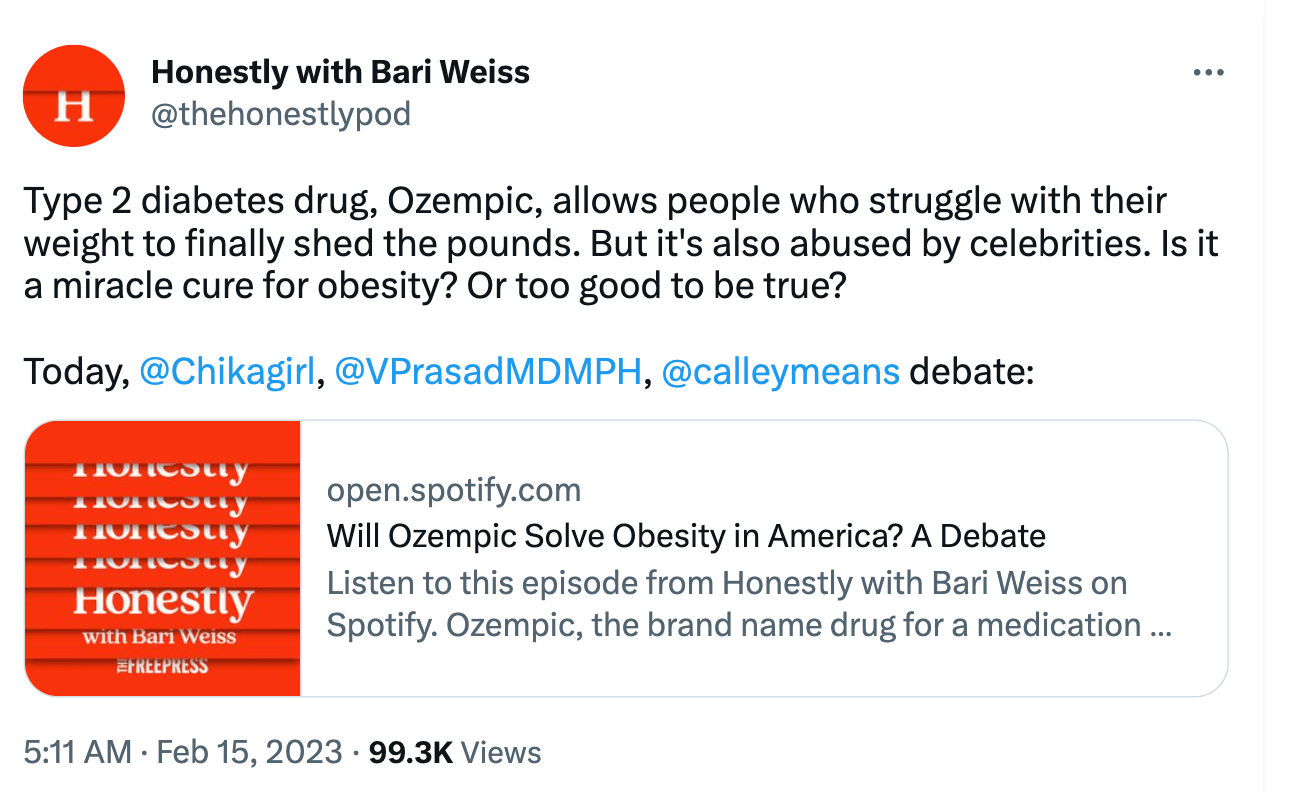
Thank you for all the messages after the Bari Weiss podcast. I’ve been having many interesting conversations and want to clarify one point about the Ozempic debate. 

This debate about whether we should be using taxpayer money to subsidize Ozempic for obese/overweight Americans symbolizes almost every important larger issue with healthcare policy. 

I want to be clear: I am not reflexively against Ozempic. Some friends said they plan to pay out of pocket and use it to lose weight. That is fine as long as the risks of the drug are clear.

My issue is the idea that taxpayers and insurance programs will treat obesity as a disease and cover this drug for a large percentage of Americans. 

This continues the 95% healthcare costs occurring on an intervention after someone gets sick. This makes no sense. No third party would look at the fact that 80% of adults are overweight or obese and say the solution is to give everyone a very marginal drug once they are overweight. No, the obvious answer is to focus on food and other metabolic habits (exercise and sleep) that can reverse and prevent obesity – and keep our cells healthy, so we don’t get other metabolic conditions. 

Ozempic is on the path to becoming the most revenue-generating drug in American history. $500 billion of government money per year could pay for that. What if we used that money to incentivize better food and better habits? We’ve been conditioned to think Americans don’t want to change, but if healthier food was cheaper and kids were trained at a young age about the importance of sleep and exercise — these habits and health trends would improve quickly.

All chronic conditions – including obesity – are tied to a breakdown in these core metabolic habits. We will not reverse the impact of an unsustainable healthcare budget or become healthier until we realize this. 

TrueMed.com is one effort to shift healthcare spending towards root cause solutions like food and exercise. I am grateful to be in the fight with so many others trying to change health incentives from sickcare to healthcare.

I discussed these ideas and actionable solutions on another podcast with Max Lugavere. Check it out here.


If this article resonates with you, sign up for the email below. I’ll send one weekly email on the incentives/systemic problems with healthcare and one with practical tips that impacted me.

Processing…
Success! You're on the list.

Which Road Are We Going to Take? 

Recently, I debated a leading Harvard obesity doctor about Ozempic on the Bari Weiss Podcast. I put my heart and soul into this podcast and think it is a robust debate that covers the larger question of where healthcare should go.

Give it a listen here.

If it resonates with you, please comment on this Twitter thread. 

___

For me, the main theme of this email is that we need to change how we think about health from a “siloed” view to a “root cause” (or metabolic) view. Treating each disease individually (statin for heart disease, SSRI for depression) has been a disaster – all these conditions have been going up. We need to inspire more awe and curiosity for interconnections in our bodies, both in personal decisions and through our public policy. 

Nothing encapsulates this debate today more than Ozempic. I’m not against the drug per se – but I am against the push to label obesity as a disease and use taxpayer money to provide injections to obese + overweight Americans over 12. This would cost over $10,000 per year buying every overweight person natural food would be cheaper. There is a push to give obese children Ozempic and tell them lifestyle/diet doesn’t matter – this would ensure they continue to eat bad food and get diseases in the future!


If this article resonates with you, sign up for the email below. I’ll send one weekly email on the incentives/systemic problems with healthcare and one with practical tips that impacted me.

Processing…
Success! You're on the list.

Drop Acid 

For 99.9% of human history, we didn’t know where our next meal came from. Because of this, it was well-advised for humans to eat as much as they could when food was available, particularly high-sugar food like fruit. As Dr. David Perlmutter points out in his book Drop Acid, an evolutionary trigger called uric acid makes us want to eat more. A rise in uric acid is triggered by fructose, a sugar found in fruit but now inserted in processed form throughout much of our food (particularly for kids). 

This book helped me fully understand how our evolutionary development is weaponized for our food today. Here’s an excerpt from an interview Dr. Perlmutter conducted with my sister Casey

“Food is informing us as to the environment. Fructose tells our body, winter is coming, and the signaling mechanism is uric acid. Uric acid is screaming in the body; get ready. If you want to survive, we’re going to help you make fat, store fat, raise blood sugar, raise blood pressure. Suddenly, that signal is on 24/7 for the winter that never comes. That’s the nature of our world today is we are constantly telling our bodies prepare for food scarcity. And now, a third of American adults isn’t just overweight but obese. And in the distant future, in the year 2030, that’s way in the future, right, eight years from now, that number’s going to be 50% of Americans, adults will be considered obese, basically, because they’re preparing for food scarcity and they’re not likely going to happen. So we call this then an evolutionary environmental mismatch.”


If this article resonates with you, sign up for the email below. I’ll send one weekly email on the incentives/systemic problems with healthcare and one with practical tips that impacted me.

Processing…
Success! You're on the list.

Don’t Call it Preventative Health

Over the next several blogs, I will highlight books that have changed my view on health – and quickly summarize the key point.

___

So often, food or lifestyle interventions are put into a niche “preventative health” box – both in how policy is made and how we think. “Serious” medical interventions occur after we are sick, and diet-related advice is for nutritionists and community groups. 

This view is factually wrong. Food is the most effective way to reverse (not just prevent) almost every chronic condition – from diabetes and heart disease (which should be obvious) to dementia and PCOS

I’ve been getting a lot of questions along the lines of “What should my parent who has prediabetes do?” or “I have multiple symptoms but have not gotten a satisfactory diagnosis – what should I do?” For almost every question, I would recommend following the 10-Day Detox Diet by Mark Hyman. This is much more than a 10-day program. I have talked to many people who have said this diet made them feel far better than any medical intervention could – and set them on a long-term journey of more curiosity about food.

One day, our public policy will reflect that food is the best medicine. The math demands it. But until then, this book is a great place to learn how food can reverse disease. 


If this article resonates with you, sign up for the email below. I’ll send one weekly email on the incentives/systemic problems with healthcare and one with practical tips that impacted me.

Processing…
Success! You're on the list.