I recently completed a podcast with Bari Weiss, an independent journalist I admire greatly.
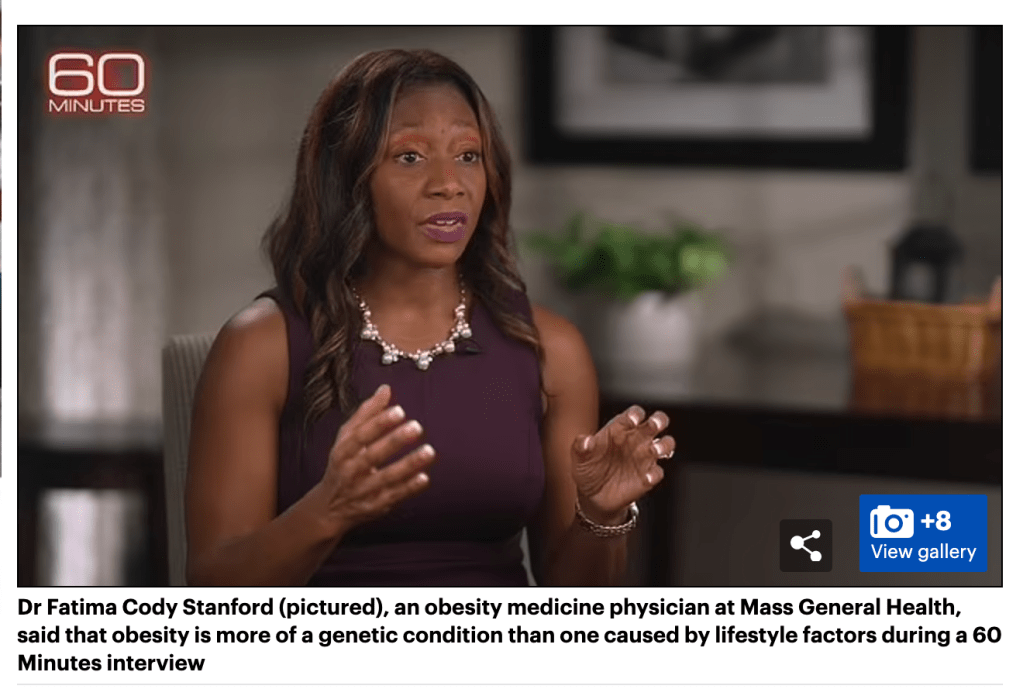
On the podcast, I debated a leading Harvard obesity doctor who is advocating that taxpayer-funded Ozempic (lifetime obesity injections) be available to 45% of teens and 78% of adults (the populations who are obese or overweight).
We both agreed that this would be more than a $1 trillion budget impact to the United States and that buying every overweight American fresh, organic food for life would be significantly cheaper.
I asked: Why are we drugging people when we could just buy them better food?
The doctor’s response was chilling. She implied Americans – including overweight children – are lazy, and the best we can do is drug them.
This cynical view of humanity is deeply embedded in the medical system. It reminded me of when my sister’s Chief Resident told her, “Don’t be a pussy” when she suggested a nutrition intervention to a patient with a migraine.
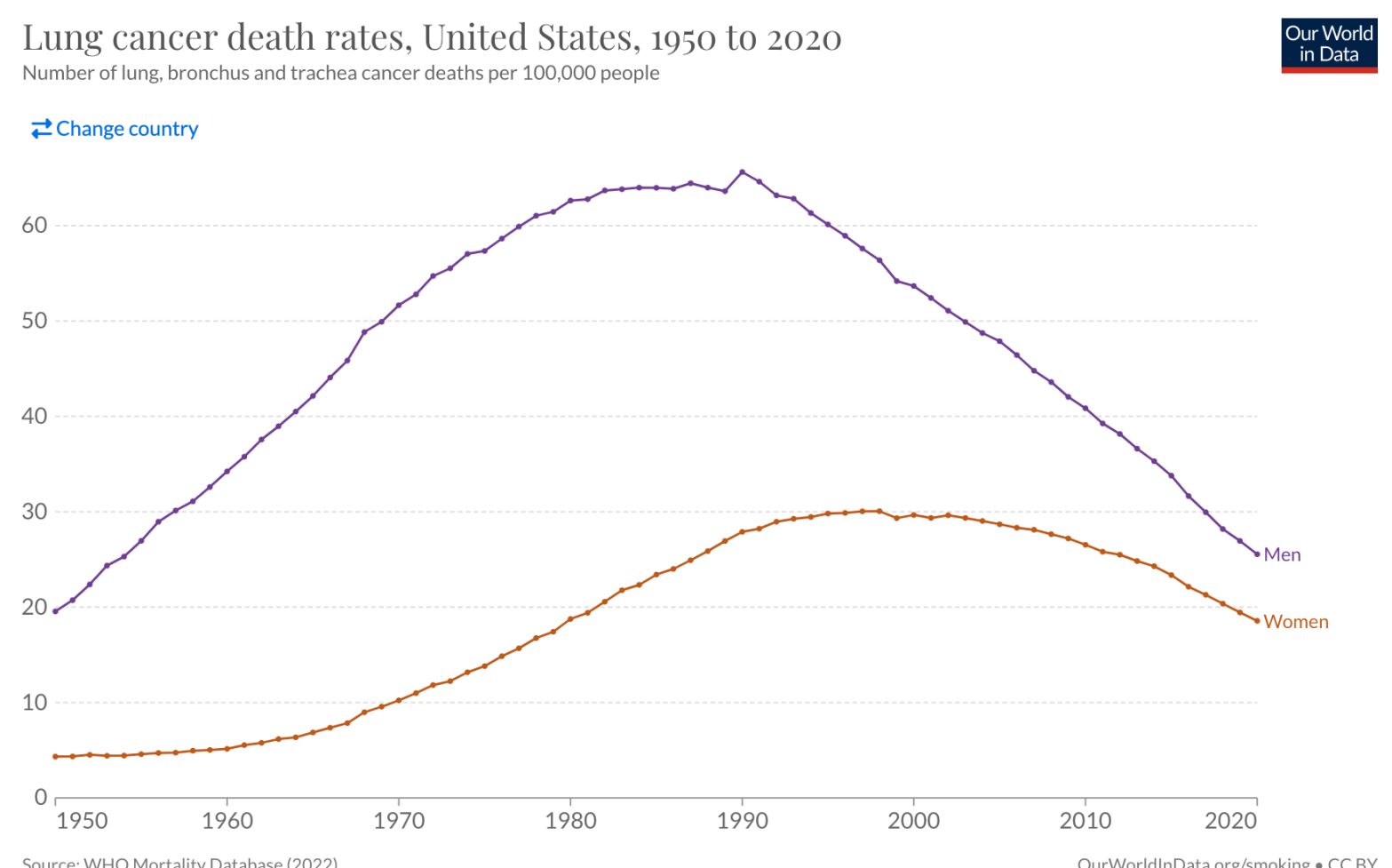
The truth is that patients do listen to medical guidelines. When the Surgeon General said (way too late) that smoking is deadly, we stopped smoking, and lung cancer went down.
Instead of promoting $1 trillion of taxpayer funding for a marginally effective drug, institutions like Harvard Medical School should call the FDA to make added sugar guidelines for children 0. Right now, it is up to 10%, which is criminal when you consider sugar is a highly addictive drug.
It sounds trite, but change will come from empowered patients and parents who question the incentives of our current guidelines. Babies shouldn’t have sugar. And if you are struggling with weight, it should not be seen as a genetic disease — it is a warning sign that there is deeper metabolic dysfunction we must get a handle on. I am still working on my metabolic biomarkers because I want to be there for my son when he’s older and has a cellularly functional brain.
I hope these emails are sparking ideas on your journey of asking questions.
If this article resonates with you, sign up for the email below. I’ll send one weekly email on the incentives/systemic problems with healthcare and one with practical tips that impacted me.
Processing…
Success! You're on the list.
Whoops! There was an error and we couldn't process your subscription. Please reload the page and try again.
If you told me on January 1st that I would be ending the month talking to Tucker Carlson about my mom’s death, the need to move government spending from Ozempic to healthy food, and the societal importance of psychedelics – I would have said you were crazy. This has been a crazy ride!
I put my heart and soul into this hour-long interview, which touches on many topics this blog covers. I’ll be posting excerpts like this one on my Instagram, and the full hour is here (paywalled but free trial)
To those who are not big fans of Tucker: This has been covered heavily on independent media (such as Breaking Points and Bari Weiss, who I spoke with yesterday), health podcasts (such as Dhru Purohit, Shawn Stevenson, and Mark Hyman, who I am meeting today) and Fox.
Reforming our food system is the bi-partisan issue of our time, and I hope other networks cover this topic, but I doubt they will because a bulk of their advertising comes from food and pharmaceutical dollars. I will say that I think is good for the country that people on the right side of the aisle (voters, politicians, and media) are becoming passionate about nutrition.
Thanks for being with me on this journey, and I hope this content adds value as you think about food and health for you and your family.
If this article resonates with you, sign up for the email below. I’ll send one weekly email on the incentives/systemic problems with healthcare and one with practical tips that impacted me.
Processing…
Success! You're on the list.
Whoops! There was an error and we couldn't process your subscription. Please reload the page and try again.
Foundational Health Principle 14: Drink CLEAN water
Step back and think about the incompetence we have seen from our government and other trusted institutions over the past decade. Time and time again, they let us down.
But for some reason, most Americans simply assume this incompetence does not transfer to one of the most essential items to our health: water.
Water makes up 90% of our blood, and hydration’s profound importance is written about in many outlets. During my conversations with leaders in functional medicine and metabolic health, two points were unanimous: clean water is essential, and we should never drink tap water.
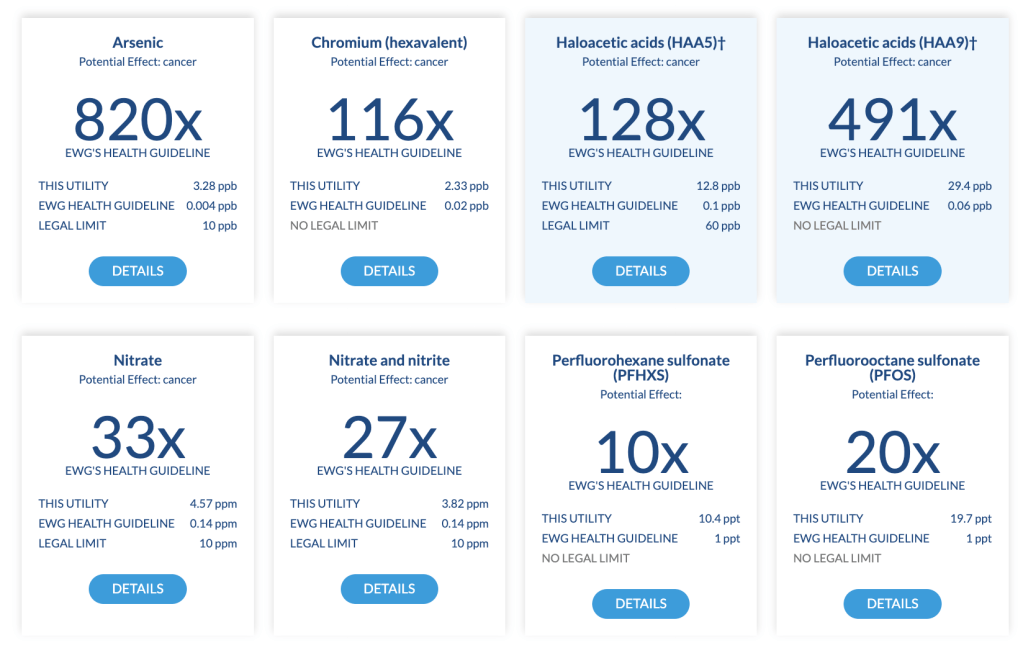
EWG has a database based on zip codes that analyze water content. As you can see below, the water in my local community has 820x the amount of arsenic they recommend.
The fact that our water is essentially poisoned can sound dispiriting. But to me, it is empowering to understand in plain language that many institutions that impact our health are broken. A clear understanding of the situation is a prerequisite to taking action.
The solutions? Avoid plastic bottles and focus on these two options
If this article resonates with you, sign up for the email below. I’ll send one weekly email on the incentives/systemic problems with healthcare and one with practical tips that impacted me.
Processing…
Success! You're on the list.
Whoops! There was an error and we couldn't process your subscription. Please reload the page and try again.
My mom’s abrupt death two years ago had a huge impact on the journey I’m on today. The most surprising part about the experience was the emotions I felt. If you told me that my mom would be diagnosed with pancreatic cancer and die 13 days later, I would have expected to feel sadness, anger, and frustration.
But the emotion I overwhelmingly felt during the actual experience was gratitude.
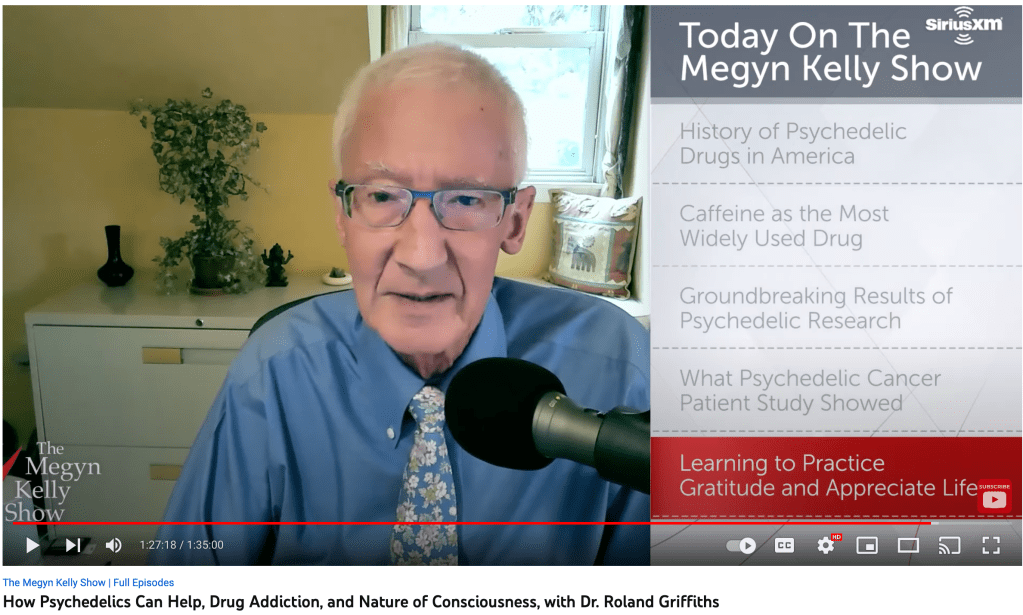
I have been struggling for ways to express these thoughts and recently came across this interview from Dr. Roland Griffiths, who expressed these sentiments much better than I could.
Dr. Griffiths is one of my personal heroes – a world-renowned neuroscientist at Johns Hopkins who decided late in his life to risk his career by studying psychedelic compounds (on thousands of patients and himself).
Recently, he was diagnosed with terminal cancer. He’ll most likely die this year. His emotions: overwhelming awe and gratitude for life.
The link below starts towards the end of the interview, where he talks about his studies giving psilocybin to terminally ill patients and his personal emotions while facing death.
I’ve also pasted below the email I wrote following my mom’s death two years ago that tried to express similar sentiments.
As Steve Jobs said, “Death is the greatest invention of life,” – and I think rethinking death is an important piece of the puzzle regarding health.
Last night, my mother, Gayle Brown Means, passed away at 71 years old.
My mom had a life-changing impact on countless people. Her spirit transcends concepts of time and place. It is beyond the ability of the English language to articulate the energy she gave to the world. Although it is impossible for me to put into words how much my mom meant to me and so many others, I wanted to share information about her final days and plans to celebrate her.
13 Days of Love and Gratitude On January 7th, 13 days ago, my mom went to the doctor’s office because she felt fatigued and had a stomach ache. A scan revealed she had Stage 4 Pancreatic Cancer that had spread to the liver. We learned this type of cancer was impossible to cure, and her time left was very short.
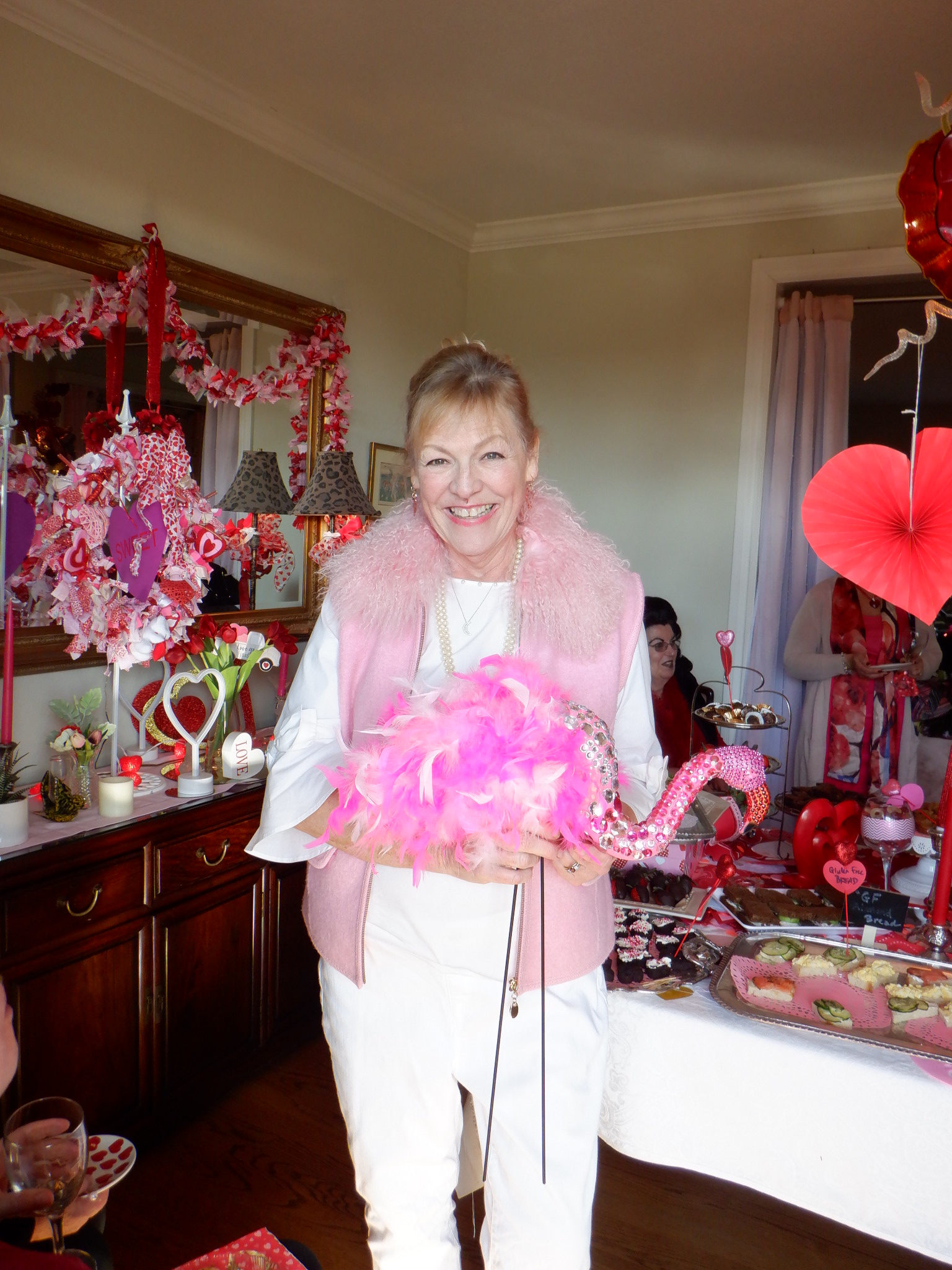
Leslie, Casey, and I quickly came to Half Moon Bay. We spent last week sitting outside on our porch with my mom overlooking the ocean, telling stories and reading letters, emails, songs, and text messages from those who loved and knew her. Gayle was beloved. Gayle was different, embodying some magic and sparkle that was cosmic and powerful. Gayle was a mentor, a guide, a role model, and a profound inspiration to countless people. Gayle had empowered people to think differently about how they lived their lives: to be more joyful, more grateful, more present, more eccentric, more exuberant, more generous. Many referred to her as a “mom” and “sister.” Many said she brightened any room she was in. Many celebrated her bright and happy style, her leopard print outfits, her flamingos, her decorations, her adventurous travel, her piano playing, her parties, and the spectacular memories of being with her, her laugh, her great interest and love of the people she met, her obvious joy, happiness, and positive energy, her many acts of kindness. She was in a constant state of self-improvement, voraciously reading about and changing her mind on topics as varied as spirituality, Middle Eastern History, and nutrition. To many, interactions with Gayle were pivotal, profound events in the trajectory of their lives. Her impact on us and how she impacted our spirits and lives set us off on trajectories that are more special and bright and have a ripple effect that will be eternal. She was the GayleBird. She was the GayleForce. She was our best friend. No one enjoyed life, family, friends, and her home more than Gayle. These final days of laughing, crying, and reminiscing with my mom were magical and ones we will never forget.
On Saturday morning, my mom’s health took a turn for the worse. She was very weak, and she started to lose control of her speech. In a burst of energy, she asked that we take her to the site where she’ll be buried – a rustic forest grove overlooking the fields and ocean off Half Moon Bay, which she loved, just 3 minutes from our house. We quickly drove her there and took her in a wheelchair to the site. My mom expressed amazement at the beauty of the ocean view, and we hugged as a family. She then had a private conversation with my dad, where they embraced each other and talked about how magical their life was. It was the most special and transcendent moment I’ve ever witnessed. Almost immediately after, my mom lost consciousness.
Since the cancer is incurable and the prognosis on life expectancy very low no matter which route we took, my mother’s wish was to pass away in our house surrounded by family. In her final days, my mom lay in our family room, unconscious and peaceful. Last night at 9pm, we heard her breathing intensify. My father, sister, and Leslie sat around her bed holding each other’s hands and discussing through tears how much my mother’s spirit meant to us and how it will live forever. My mom took a big last gasp, and that spirit left her body.
My mom’s life and the heroic way she lived her final days have hard-wired us how true statements like “life every day to the fullest” are. This is sudden and deeply sad, but we are at peace and full of gratitude and love. My mom has had an impact and changed so many people she came into contact with, and there is no question that her energy and spirit are still very much with us.
While we cannot have a large gathering now because of COVID, we invite you to come visit us in Half Moon Bay when you can, stay with us, tell stories, look at pictures, take long walks on the beach, visit Gayle’s spectacular burial site, and celebrate her wonderful life. Casey, Leslie, and I will be here in the near future (perhaps longer). We will consider this a rolling, long-term party, just as Gayle would want.
Thanks to everyone for the thoughtful reflections on my mom. We want to thank everyone who showered Gayle and us with so much love.
With love and gratitude,
Calley
If this article resonates with you, sign up for the email below. I’ll send one weekly email on the incentives/systemic problems with healthcare and one with practical tips that impacted me.
Processing…
Success! You're on the list.
Whoops! There was an error and we couldn't process your subscription. Please reload the page and try again.
We’ve been talking a lot about the problems with medicine, and some have been asking how I’m trying to solve them.
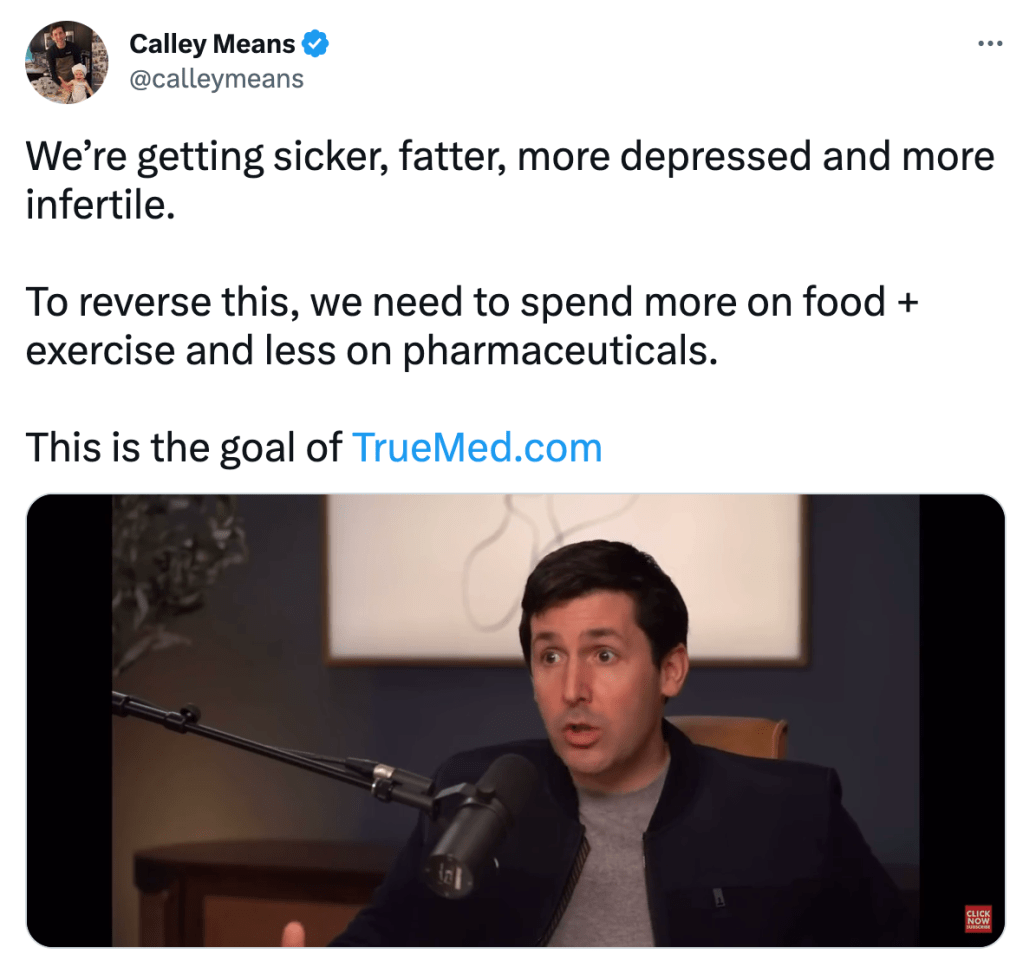
I wanted to share more about the company I’m devoting the bulk of my time to – which is trying to fix the core issue of incentivizing people to be healthy.
This sounds simple, but is a big deal because 95% of healthcare costs currently occur after someone gets sick.
This makes no sense: if a smart alien came to earth and saw our health issues (obesity, heart disease, diabetes, and other associated food-based conditions), they would never say to wait for everyone to get sick and then prescribe pills (our current system). They would ask how we can keep people healthy.
TrueMed is a payment integration that enables qualified customers to use pre-tax HSA/FSA funds to purchase health-promoting products or services from their favorite merchants.
Soon, the TrueMed payment option will be available right in the checkout flow of merchants that sell healthy food, supplements, exercise equipment, and other health and wellness products.
If you are a merchant who would like to accept HSA/FSA funds, please reach out or fill out our form here.
If you are an individual excited about saving money and using pre-tax HSA/FSA funds on healthy food, check out our website.
If this article resonates with you, sign up for the email below. I’ll send one weekly email on the incentives/systemic problems with healthcare and one with practical tips that impacted me.
Processing…
Success! You're on the list.
Whoops! There was an error and we couldn't process your subscription. Please reload the page and try again.
One topic my sister and I are exploring for our book is the idea that we are being deliberately confused about food.
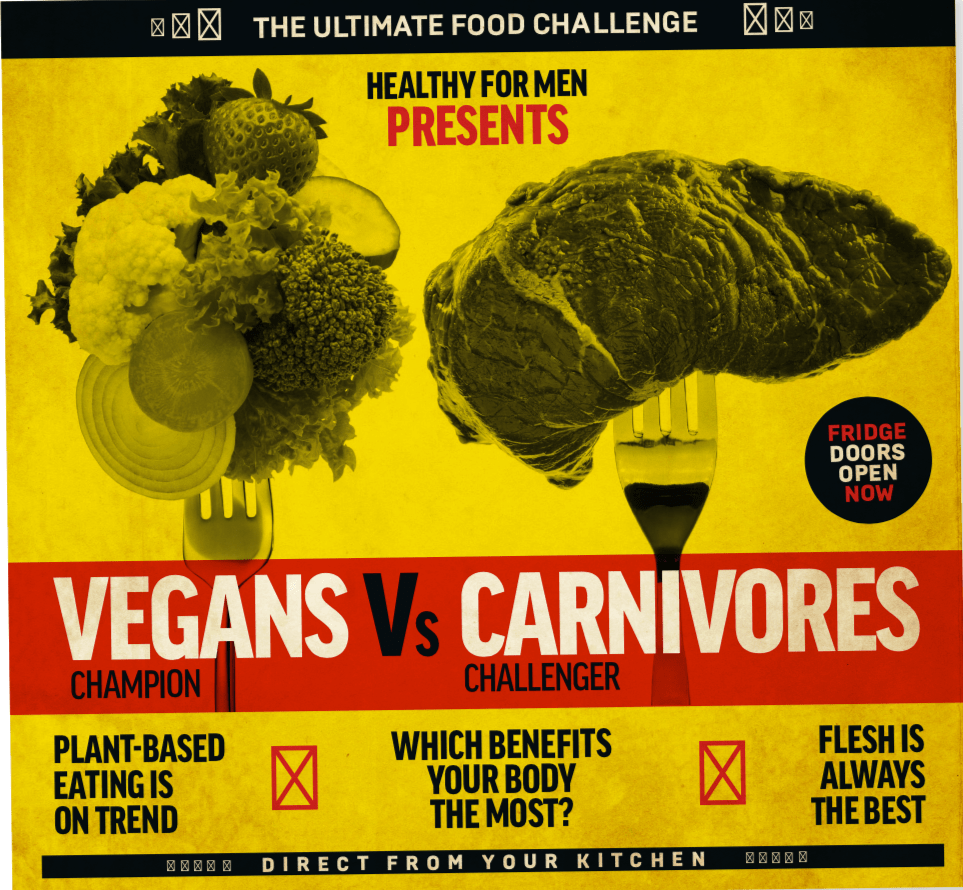
Keto, paleo, vegan, carnivore… There is an endless debate about what dietary philosophy is best.
But this debate ignores the key questions:
What nutrients do I need from food to keep my cells thriving?
What elements in food cause damage to my cells – and should be avoided? Food is a matching problem between the micronutrients our cells need to thrive and those containing them. We need to start analyzing – personally and as a society – what the components of food are.
We should analyze the components of food in the same way. Consider a simple example: purified water is good and helps our cells thrive. Water that is loaded with arsenic is terrible.
With food, we know that people who eat ultra-processed foods, too many omega-6 fats, and excess sugar tend to have higher rates of chronic disease and early death. And we know that including omega-3 fats, adequate micronutrients and phytonutrients, and antioxidant-rich foods supports longevity. The question is, what can I eat to maximize omega-3s, micronutrients/phytonutrients, and antioxidants?
Seeing food through this lens helps us appreciate the overlap between all of the significant dietary ideologies, and this overlap is where some essential nutritional truths emerge.
What could whole-food, plant-based eaters and carnivore enthusiasts possibly have in common? One group eats only plants, and the other only eats meat. But in fact, these dietary ideologies share traits:
Both focus on the nutrient density of food, striving to get as many nutrients as possible from what they eat.
Both eschew processed foods and abstain from processed grains, sugar, food additives, and seed or vegetable oils.
Both take a thoughtful approach to food sources and sustainability, with an appreciation of the importance of soil health.
We need to stop falling into the draft of debating dietary philosophies and start seeing food as a challenge to find sources of the micronutrients that help us thrive (and avoid substances that hurt us).
If this article resonates with you, sign up for the email below. I’ll send one weekly email on the incentives/systemic problems with healthcare and one with practical tips that impacted me.
Processing…
Success! You're on the list.
Whoops! There was an error and we couldn't process your subscription. Please reload the page and try again.
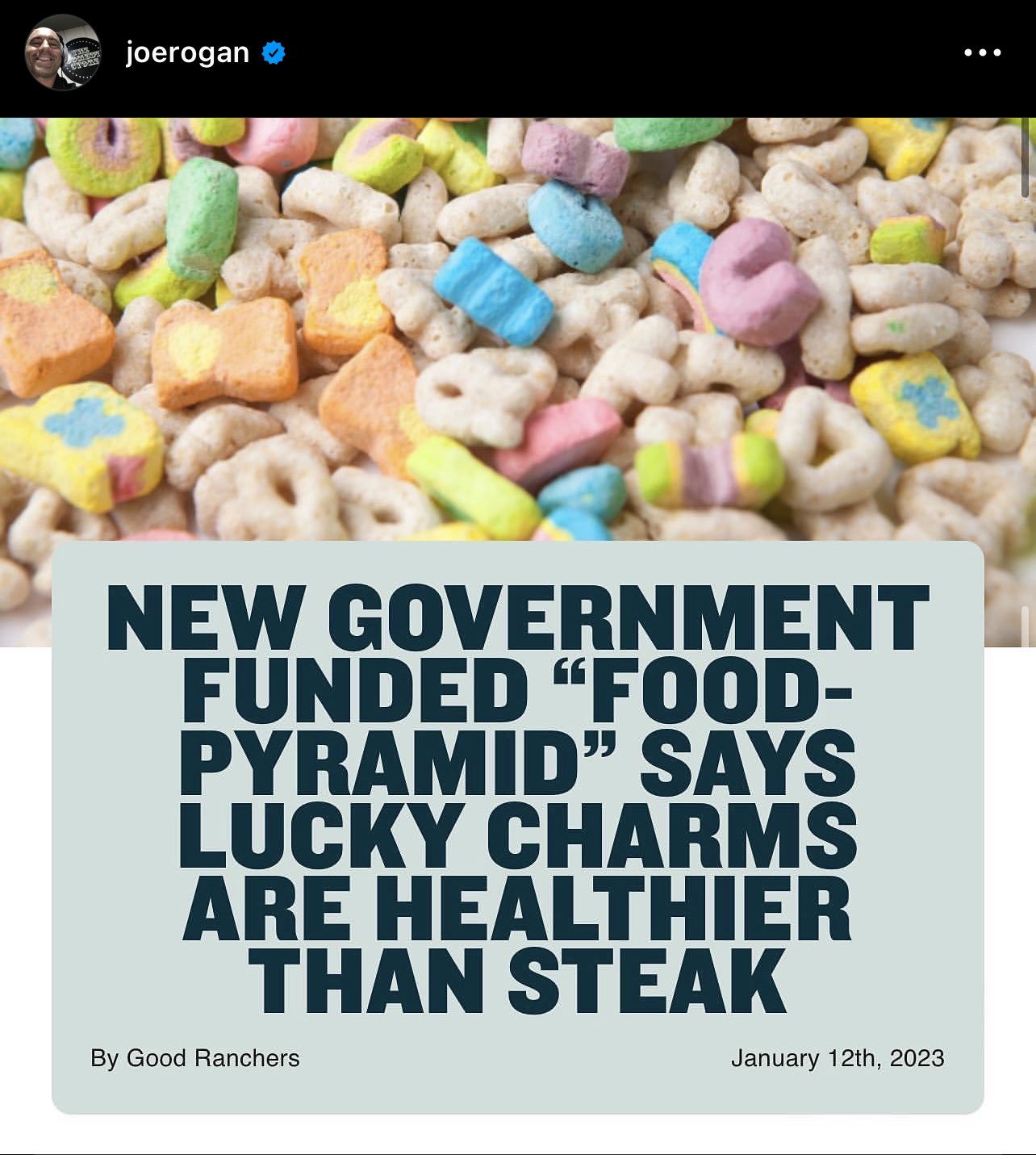
As you might have seen, my TrueMed co-founder Justin and I have been calling attention to the recent NIH-funded nutrition study that said Lucky Charms are healthier than eggs and beef. This culminated in nightly scrutiny of the study on major networks and Joe Rogan linking to our content in a post with over 900,000 likes.
The efforts paid off – the stated goal of the study was to impact children’s nutrition guidelines and marketing. The plan was to put these scores on labels to guide purchasing decisions. Due to our promotion, efforts to put “highly encouraged” labels on orange juice and processed cereals were delayed. Because the study’s guidelines are so disastrous, this will save lives.
The study’s lead author recently called me from his trip to Davos to defend the study. He said he was getting hundreds of angry emails because of the news coverage – to which I replied that 25% of children have pre-diabetes because of a rigged system, so it’s understandable why people are frustrated.
He seems like a dedicated professional who has produced hundreds of nutrition studies. But my thesis is that the incentives of our food system are larger than any one person, and they are hurting all of us.
I want to speak facts. The fact is that this prominent nutrition researcher made the following points to me in our conversation. He said:
Lucky Charms and Cheerios are highly nutritious – and it is correct to rate these highly processed grains at the same level as whole grains like quinoa.
For children, orange juice (24g of sugar per 8oz serving) should be encouraged daily.
It was classist to expect low-income people to eat whole food. The best we could do is “expect people to eat processed food that is more healthy.”
Despite receiving funding from processed food companies, these financial conflicts did not impact the results – even though chocolate almond milk (which Danone, a chief funder of the study, makes) is the highest-rated dairy product (above Greek yogurt). He also said that the fact that he receives personal payments from food and pharmaceutical companies does not slant research. He said food companies did not expect anything in return for the millions of dollars they’ve given to his research.
When I consulted for food companies early in my career, we funded nutrition researchers to create more studies that would confuse Americans. I am sure the researchers are well-intentioned and dedicated, but each new nutrition study serves the purpose of further confusion.
The more I dig into this issue, the more I am convinced one of the essential principles in health is that it is simpler than we are led to believe:
Avoid sugar
Avoid seed oils
Avoid highly processed grains
Stick to whole foods
We should build our policies and decisions around these simple principles. And resist the current system, designed to confuse and gaslight us.
If this article resonates with you, sign up for the email below. I’ll send one weekly email on the incentives/systemic problems with healthcare and one with practical tips that impacted me.
Processing…
Success! You're on the list.
Whoops! There was an error and we couldn't process your subscription. Please reload the page and try again.
I’m en route to Florida for an hour-long interview with Tucker Carlson about food/health incentives. I am so grateful to carry this message forward, and hope these emails have sparked some interesting ideas!
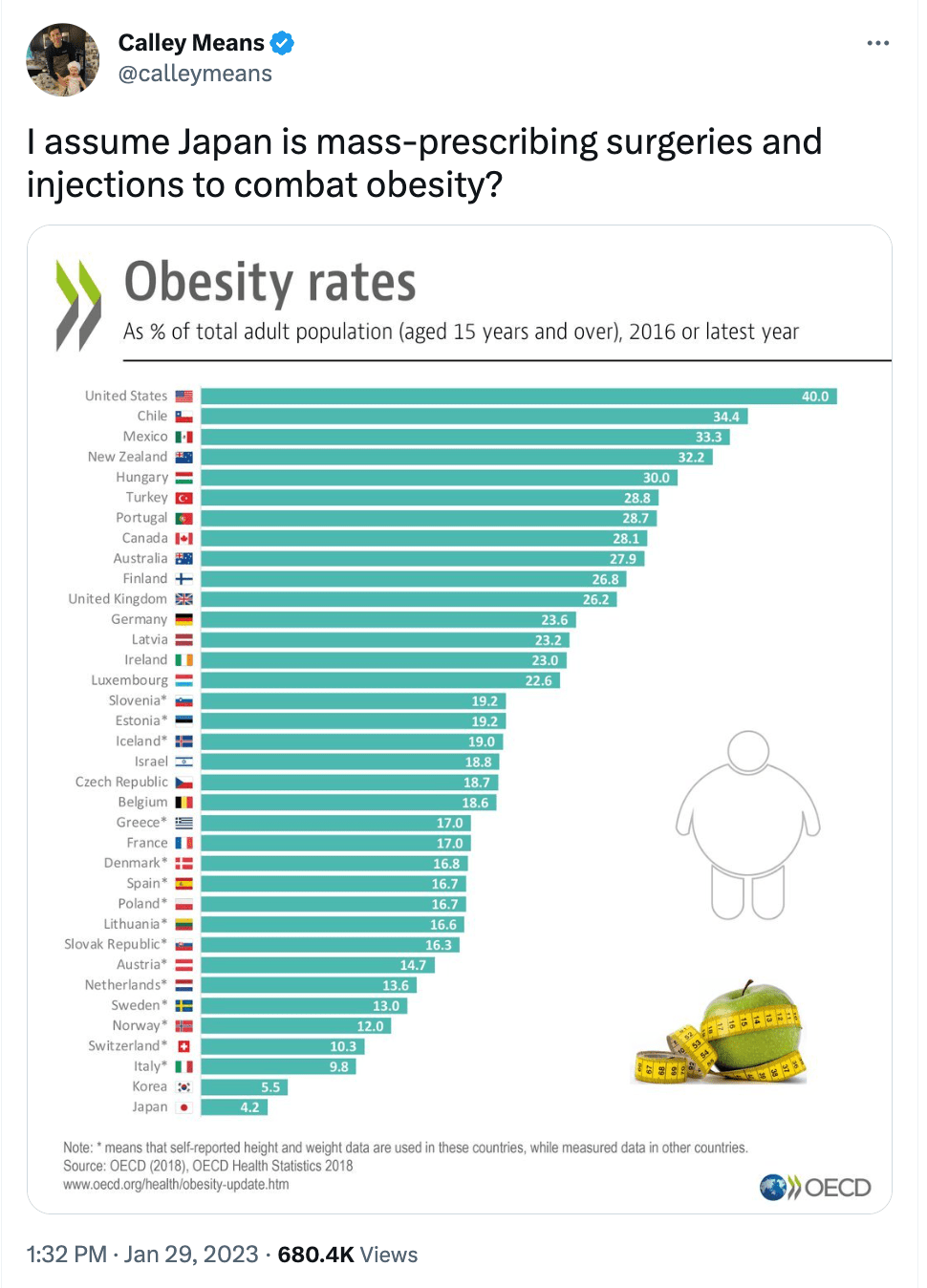
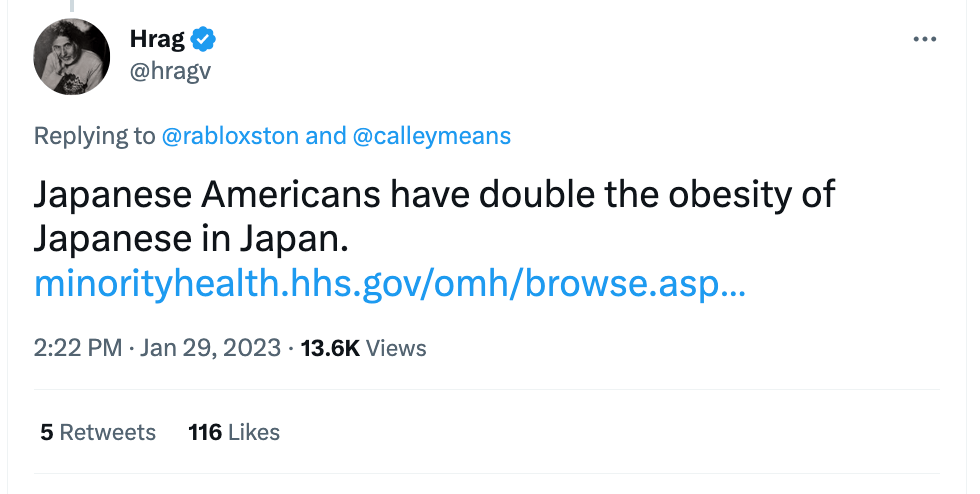
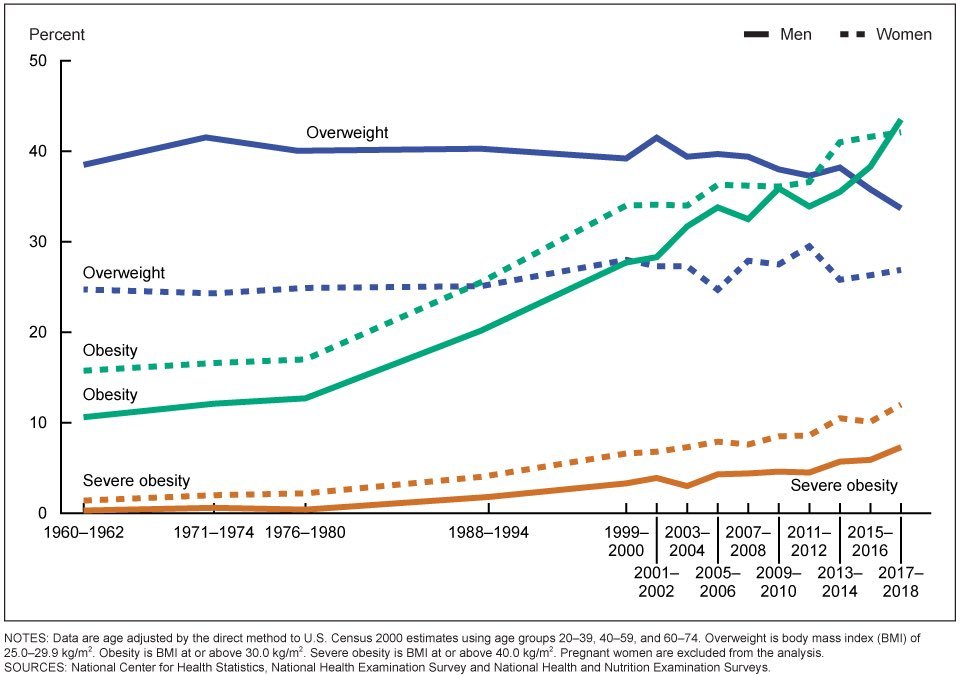
Clearly, this is not the case, and addicting America to band-aid cures isn’t working. Here are 4 of the most interesting reactions I received to this chart:
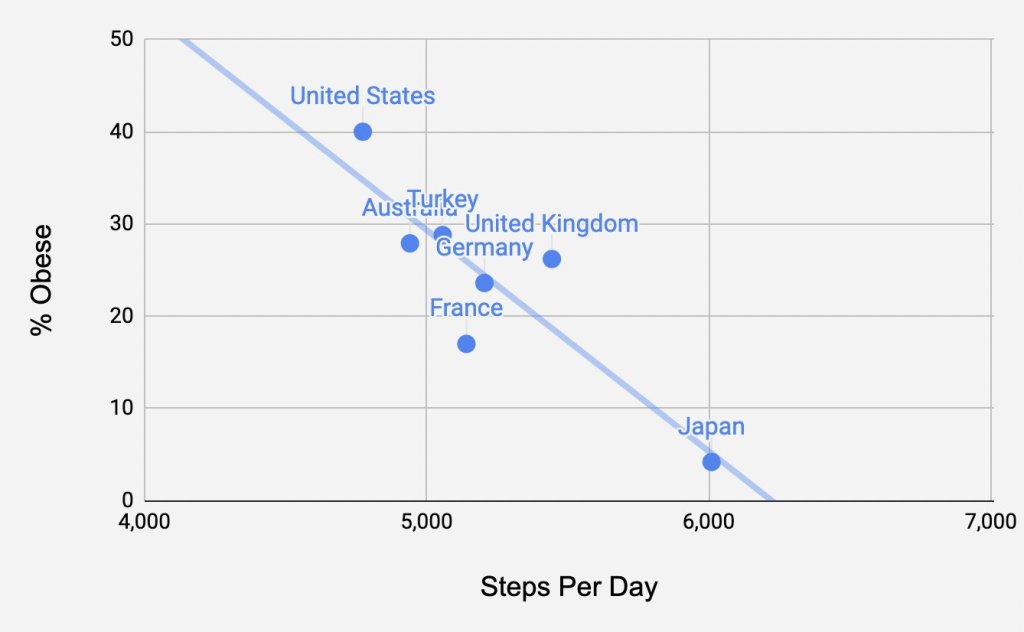
(1) One Twitter user created this graph charting obesity rate and steps per day. Clearly, the way we design cities matters.
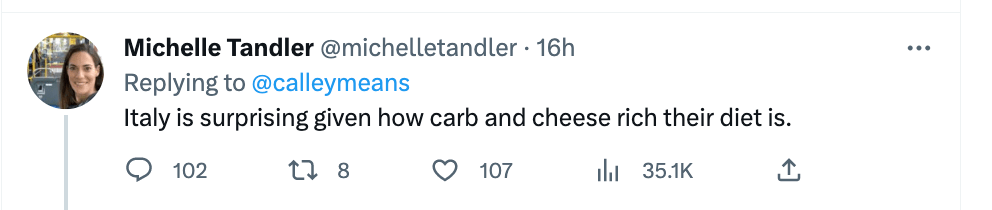
(2) There was a lot of discussion of why Italy – with a carb-heavy diet – has such low obesity. A lot of interesting responses to Michelle’s question here. First, Italy’s card consumption is probably lower than we think. Second, Italians have a habit of walking frequently – particularly after meals- which greatly impacts glucose management. Third, the quality of food matters – and a heuristic I often use is “Are we evolutionarily made to eat this food?” We’ve been eating whole grains for hundreds of thousands of years. Processed grains (which remove the fiber, which increases glucose impact and removes nutrients to make the food more shelf-stable and addictive) are only 120 years old.
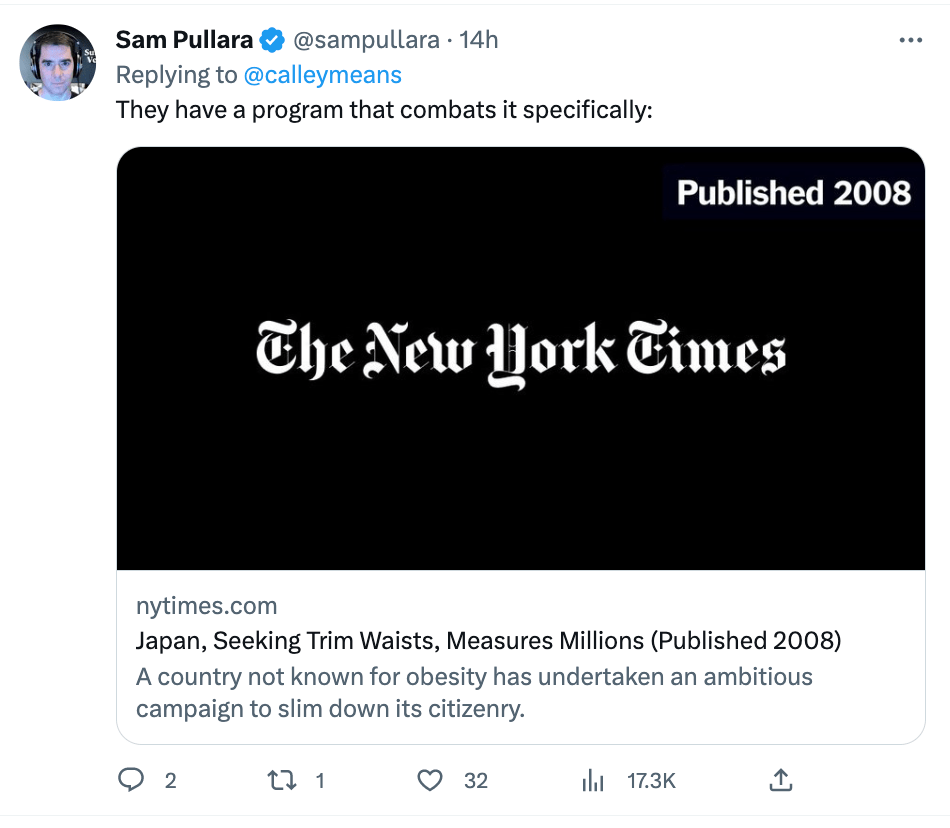
(4) Whereas many U.S. doctors are no longer weighting patients or speaking about weight, Japan has spoken clearly about the need to combat obesity and created public policies to incentivize healthier habits (such as healthy eating, movement, and stress management)
If this article resonates with you, sign up for the email below. I’ll send one weekly email on the incentives/systemic problems with healthcare and one with practical tips that impacted me.
Processing…
Success! You're on the list.
Whoops! There was an error and we couldn't process your subscription. Please reload the page and try again.
There’s been a lot of talk about obesity drugs like Ozempic. Besides the breathtaking conflicts of interest, Ozempic concerns me because it furthers the great lie in healthcare that diseases are siloed.
It is increasingly clear that heart disease, diabetes, many forms of cancer, dementia, and most other chronic diseases are actually roots of the same branch.
Treating these in silos (and saying conditions that are new in the past 50 years, like obesity, are genetic) has been profitable but not effective – these conditions have all gone up, and life expectancy has gone down as we spend more money — because we are not attacking the root cause!
The same is true with obesity. If a child takes Ozempic and continues to eat unhealthy food and be sedentary – they will get other diseases because our cells continue to be fed poison. Until we move healthcare policy to realize food is at the foundation of health (and decrease subsidizing bandaid drugs), we will not get better!
If this article resonates with you, sign up for the email below. I’ll send one weekly email on the incentives/systemic problems with healthcare and one with practical tips that impacted me.
Processing…
Success! You're on the list.
Whoops! There was an error and we couldn't process your subscription. Please reload the page and try again.
Foundational Health Principle 13: Expose your cells to targeted stress (heat and cold exposure)
Fact 1: 10-15 Minutes of Cold Exposure Increases Dopamine 250% Above Baseline. (Dr. Andrew Huberman)
There’s been a lot of talk on health podcasts about cold plunges and saunas. These tools are becoming all the rage – and there’s no shortage of resources on them (some are linked below). But I wanted to share the concept that helped me understand why these tools might be important:
Chronic stress (what happens when we constantly eat inflammatory foods and scroll social media all day) isn’t good, but increasing research targets acute stress on our cells. Throughout human history, we have been exposed to acute stressors (bursts of exercise, temperature shifts as we lived outside), but modern life has largely taken these away.
A growing body of research shows that subjecting our cells to stress is essential to building up antioxidant defenses (which fight oxidative stress), increasing mitochondrial numbers, improving endurance capacity, and stabilizing energy management in the body. This research has helped me see cold/heat exposure less as a fad and more as an important tool to expose our cells to stress they are evolutionarily accustomed.
Here are the two definitive podcasts on the subjects if you want to dig more into the subject:
If this article resonates with you, sign up for the email below. I’ll send one weekly email on the incentives/systemic problems with healthcare and one with practical tips that impacted me.
Processing…
Success! You're on the list.
Whoops! There was an error and we couldn't process your subscription. Please reload the page and try again.





 Calley Means