Recently, I had the opportunity to go on Tucker Carlson (the country’s most-watched cable show) to talk about the core themes of this email. Particularly, I discussed my experience as a political consultant, where I saw firsthand how the food and health systems are rigged against us, particularly kids.
This is a bipartisan issue, and I am proud of the bi-partisan readership of this email. I tried to make that point to Tucker and plan to go on left-wing outlets soon.
If this article resonates with you, sign up for the email below. I’ll send one weekly email on the incentives/systemic problems with healthcare and one with practical tips that impacted me.
Processing…
Success! You're on the list.
Whoops! There was an error and we couldn't process your subscription. Please reload the page and try again.
Like 90% of Americans, I have often not gotten enough exercise. However, seeing exercise as medicine has changed my perspective and led to more consistent habits.
The key to exercise is consistency and low-impact training. Getting your heart rate up to a moderate level for more than 150 minutes per week is generally all it takes to achieve equal (or better) disease-reversing impacts as drugs.
With all these disease-fighting benefits, doctors can prescribe exercise – unlocking tax-free FSA/HSA spending. This insight led me to start TrueMed. We’ll have more information soon on how qualified patients can seamlessly purchase exercise equipment tax-free.
If this article resonates with you, sign up for the email below. I’ll send one weekly email on the incentives/systemic problems with healthcare and one with practical tips that impacted me.
Processing…
Success! You're on the list.
Whoops! There was an error and we couldn't process your subscription. Please reload the page and try again.
Foundational Health Principle 6: Hunt for Micronutrients
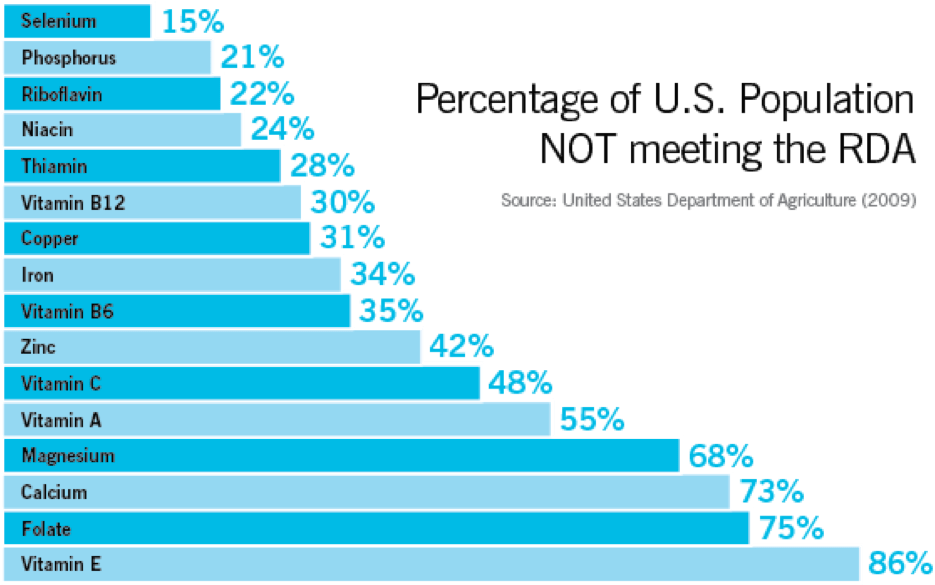
Fact of the day: 90% of Americans lack one or more key nutrients.
What diet is best?
Countless books, podcasts, companies, and Instagram influencers strive to answer this question.
Keto, paleo, vegan, carnivore… We’ve all heard the debates.
This is not the right question. Instead of asking what diet is best, we should be asking:
What nutrients do I need from food to keep my cells thriving?
As my sister Casey has often said, food is nothing more than genetic information. We should always analyze food through the lens of the positive and negative elements inside it that either help or hurt our cells or help them.
Focusing on dietary ideology is less important than focusing on principles. Humans around the world have had varied diets for millennia. The key focus of any dietary strategy should be ensuring what you are eating has the necessary components to support optimal cellular biology.
The message of the best health influencers – from carnivores to vegans – sticks to this idea of seeing food through the lens of how its composition helps our cells.
The key is hunting for the right micronutrients.
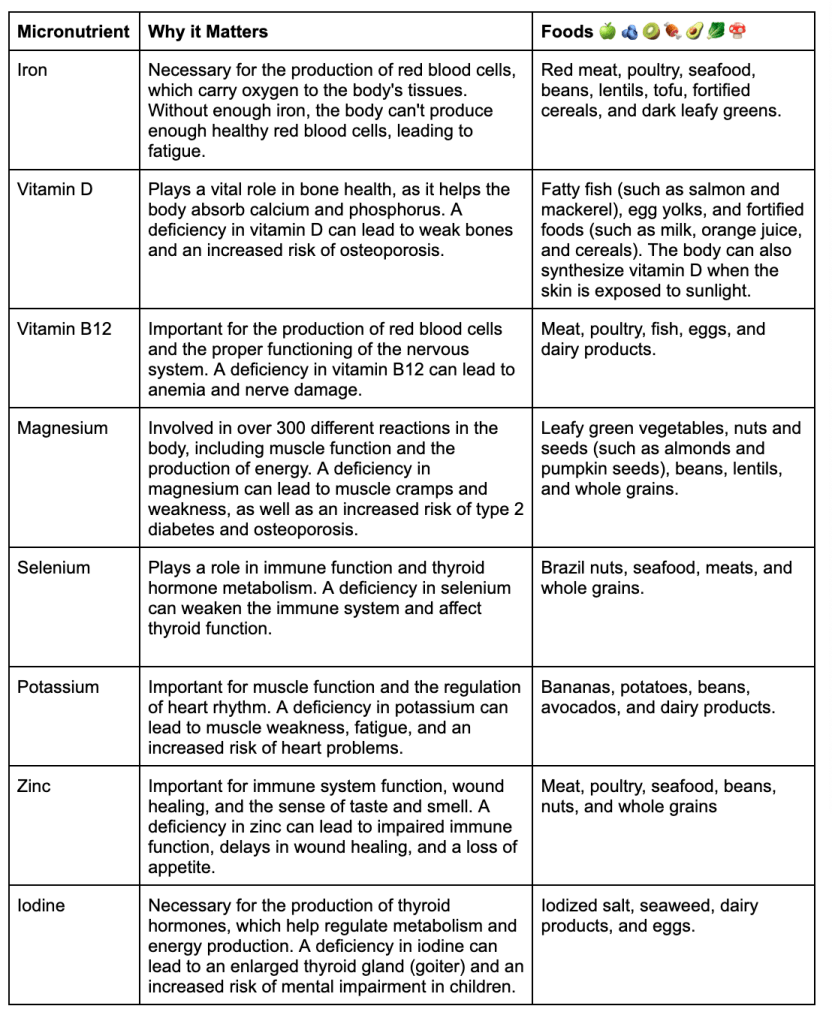
Micronutrients are essential for cells to function and maintain properly in the body. These nutrients play various roles, including helping build and repair tissues, supporting the immune system, and converting food into energy. They also play a role in the production of hormones and enzymes. Adequate intake of micronutrients is essential for maintaining healthy cells, as they help cells to grow and repair themselves. A deficiency in any micronutrients can lead to health problems and affect the overall health and functioning of cells in the body.
Here’s a list of 8 crucial micronutrients — currently lacking in the American diet — that we should hunt for:
If this article resonates with you, sign up for the email below. I’ll send one weekly email on the incentives/systemic problems with healthcare and one with practical tips that impacted me.
Processing…
Success! You're on the list.
Whoops! There was an error and we couldn't process your subscription. Please reload the page and try again.
Foundational Health Principle 5: Don’t Kill the Microbiome with Pesticides
Fact of the day: A recent study found glyphosate in the urine of 99 percent of the pregnant women they observed. Higher glyphosate levels were associated with lower birth weight and higher neonatal intensive care unit admission risk.
I was speaking to a doctor with two Harvard degrees about the rise of brain disorders (dementia, depression, neurological issues). I posited that disruptions in our microbiome are surely to blame, and he replied, “I’m not into pseudo-science like that.”
This is how I used to think and how many “smart” people currently see health: “serious medicine” is drugs and procedures. Talk of switching to organic food to not damage the microbiome is for hippies.
This view is tragically wrong: a key focus of our individual lives and U.S. public policy should be to protect the trillions of bacteria cells in our gut.
The microbiome controls our reproductive hormones, happiness (95% of serotonin is produced in the gut, not the brain), immune system, and functioning of our skin, respiratory tract, and brain.
So, where does organic food come in? The purpose of pesticides and herbicides is to kill organic life (pests and weeds) around plants. This food is disrupting the delicate balance of bacteria that controls the functioning of our body.
The use of these chemicals has exploded (see chart above) and has been largely unregulated. Dozens of the most popular chemicals used to treat U.S. crops are banned in the EU.
Medical leaders are saying it is “unclear” why we are seeing cascading increases in infertility, depression, autoimmune disorders, allergies, obesity, and childhood development delays all at once. A big reason is that we are barraging our bodies with unprecedented toxins. In 20 years, we will look back on the chemicals we’re putting in food as a scandal. Change is being made, and there’s reason for long-term optimism, but we should take individual action in the meantime.
Eating organic doesn’t solve everything, but it’s a big start. Below is a list I’ve found healthy of the “Dirty Dozen” foods you should ensure are organic.
If this article resonates with you, sign up for the email below. I’ll send one weekly email on the incentives/systemic problems with healthcare and one with practical tips that impacted me.
Processing…
Success! You're on the list.
Whoops! There was an error and we couldn't process your subscription. Please reload the page and try again.
Foundational Health Principle 4: Increase Omega-3 Fats
Fact of the day: Omega-3 supplements (1,000 mg per day of EPA) were as effective in reducing depression as the leading SSRI. (PubMed)
In the past 100 years, our source of fats has dramatically changed from a diet high in Omega-3s to one high in Omega-6s. There’s much more science on this, but the TLDR is that omega-3 fats are building blocks of cellular (particularly brain cell) health – and we must increase our intake.
Tragically, our farm subsidies still promote inflammatory Omega-6 seed oils, and the healthcare industry continues to stand silent as they profit from the increase in chronic diseases tied to our dietary shifts. Our healthcare/agriculture policy will change eventually, but many individuals can do it now, and it starts with paying attention to the fats you eat.
As Dr. Andrew Huberman and many other leading voices have pointed out, nearly everyone should be on omega-3 supplementation: 1,000 mg of EPA and 400 mg of DHA (two omega-3s). One important note is that most leading supplements contain 20% of this total.
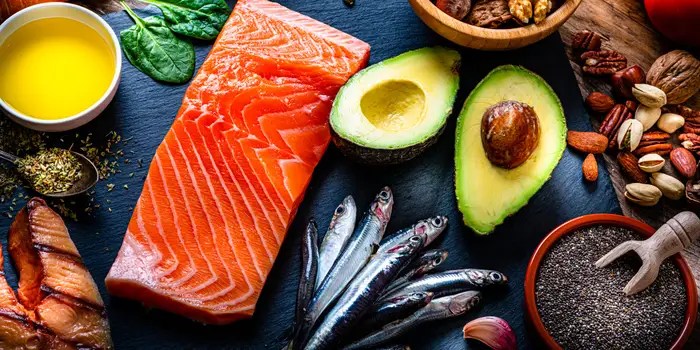
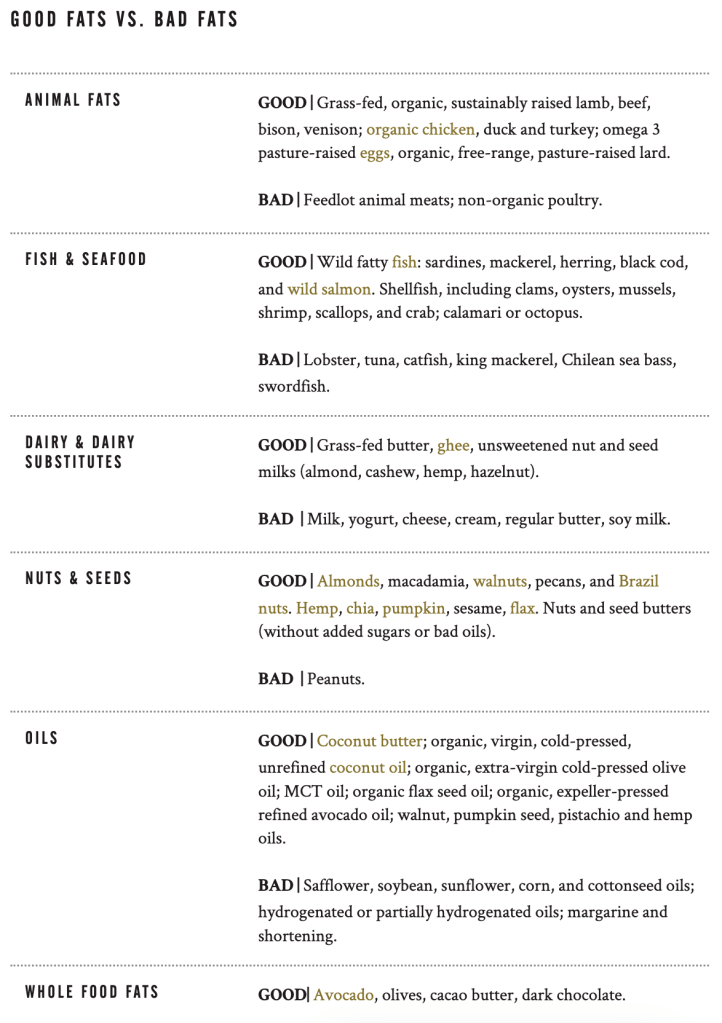
The best brand on the market is Nordic Naturals Ultimate Omega 2x. I’ve also included a cheat sheet below of the fats in your diet to look for – and the ones to avoid.
Omega-3s are medicine — more effective than almost any pill in reducing inflammation and preventing disease. Through True Medicine, we plan to enable seamless tax-free spending on this medicine to qualified patients in the coming months.
If this article resonates with you, sign up for the email below. I’ll send one weekly email on the incentives/systemic problems with healthcare and one with practical tips that impacted me.
Processing…
Success! You're on the list.
Whoops! There was an error and we couldn't process your subscription. Please reload the page and try again.
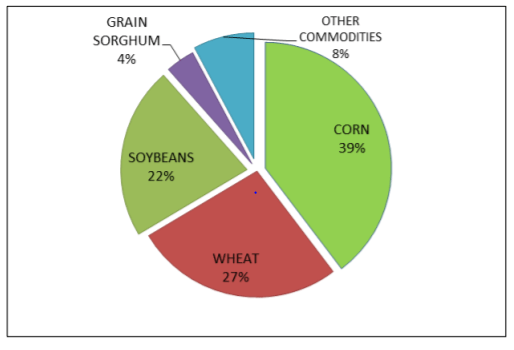
Fact of the day: 88% of U.S. agriculture subsidies go to the 3 grains that are the foundation of processed food: corn, wheat, and soy. Less than 0.5% of subsidies go to fruit or vegetables.
Like seed oils, highly processed grains didn’t exist until the early 1900s. Today, they are a cornerstone of our diet.
So, what happened to grains in the last 100 years?
The “refining” process (which almost all grains we now experience) involves removing the fibrous bran from the grain. Removing the bran extends shelf life since fat stored in the germ can spoil quickly. This also creates a soft, chewy texture.
Grains are carbohydrates that convert to sugar in the blood. But by altering the grains, the carbohydrates can be broken down more quickly when digested – which translates to increased blood glucose levels sooner after eating. Fiber helps slow the body’s breakdown of starches into glucose, helping keep blood sugar stable – but the “refining” removes this element.
It is not lost on food manufacturers that sugar is addictive, and processed grains are another way food is weaponized to get more glucose into your bloodstream.
Most of these processed grains are mixed with other unhealthy ingredients (such as sugar and seed oils), contributing only to health problems.
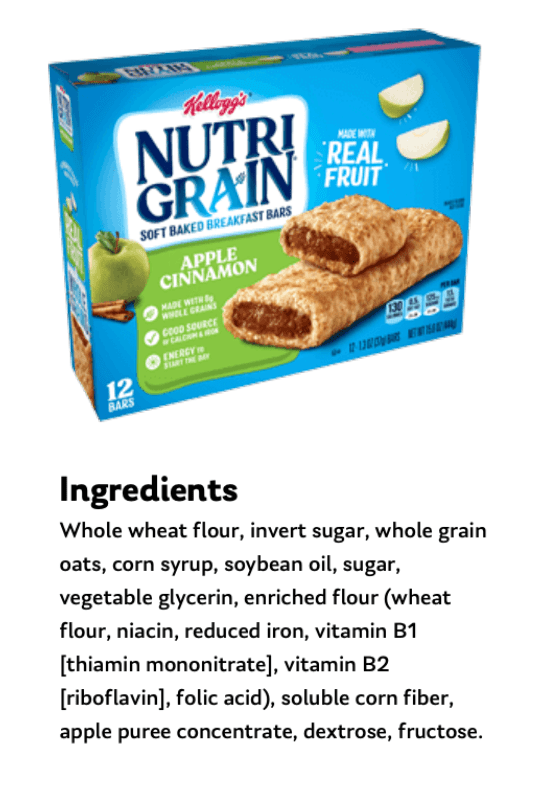
Below are the ingredients for Nutrigrain bars, which are marketed as healthy. Notice the top ingredients include three grains (Whole wheat flour, whole grain, enriched flour), SIX types of sugar (inverted sugar, corn syrup, sugar, vegetable glycerin, dextrose, and fructose), and soybean oil (the most popular seed oil).
It is shocking how many foods – even ones we assume are healthy – follow this formula. Look at the label of your favorite food with a “plant-based” label, and you’ll likely see the same toxic ingredient combo:
Alternatives to grains include broccoli rice, cauliflower rice, and grain-free pasta (like Banza). Alternatives to traditional ultra-refined grains like white flour and wheat flour are coconut flour, chickpea flour, cassava flour, and almond flour.
If this article resonates with you, sign up for the email below. I’ll send one weekly email on the incentives/systemic problems with healthcare and one with practical tips that impacted me.
Processing…
Success! You're on the list.
Whoops! There was an error and we couldn't process your subscription. Please reload the page and try again.
Foundational Health Principle 2: Don’t Eat Seed Oils
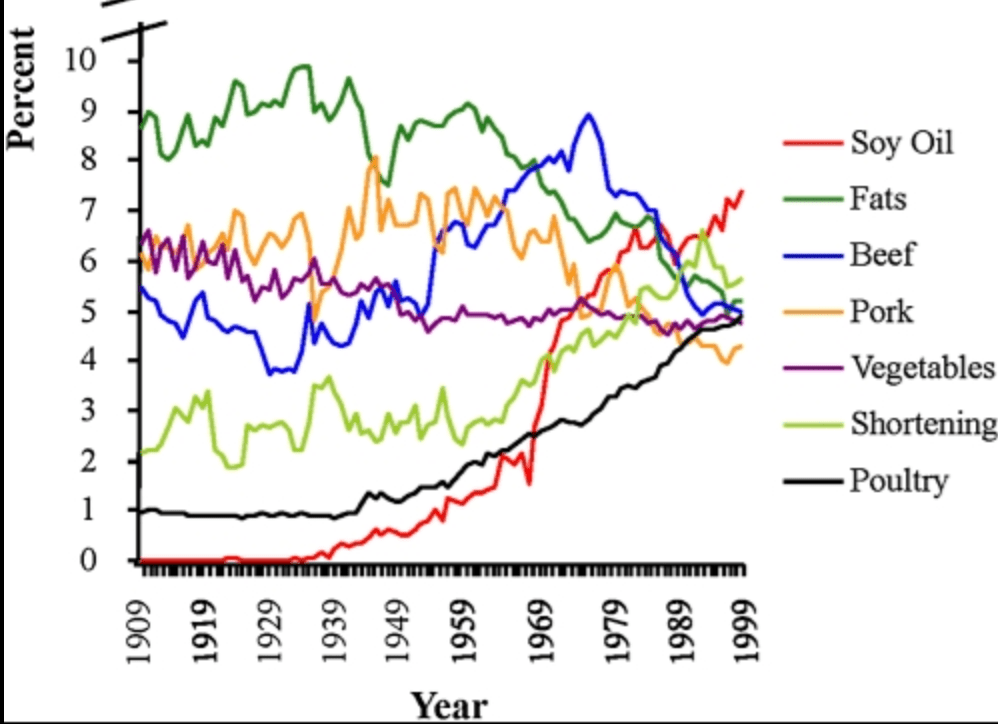
Fact of the day: Today, soybean oil is the single-largest source of calories in the United States. 120 years ago, it didn’t exist.
As many of you know, I’m starting a company that issues diet and lifestyle habit plans to prevent and reverse disease – which unlocks tax-free spending. Food and exercise are medicine – they can and should be prescribed more.
Emails over the coming weeks will share the 25 principles True Medicine uses to base our recommendations. The highest-leverage thing the United States could do is move healthcare policy to incentivize these principles.
Today’s focus is on seed oils. Look in your fridge; you’ll probably see them hiding everywhere – even in “healthy” items, from organic humus to artisanal oat milk. Today, almost everyone is falling victim to hidden inflammatory oils, which are wrecking our health.
These seed (or vegetable) oils include canola, corn, soybean, grapeseed, safflower, peanut, palm, and cottonseed. Look at almost any label, and you’ll almost certainly see one of them.
The body treats these oils as unknown foreign invaders (thus the inflammatory response) – because they are seed oils that didn’t exist until 120 years ago (i.e., for 99.9999% of human evolution).
Because seed oils are cheaper to produce (if you want to lose your appetite, watch this video of the manufacturing process), they have taken a share in the American diet from fats that humans have relied on for thousands of years – like olive oil, avocado oil, coconut oil and animal-based fat (like butter, tallow or ghee). These are primarily omega-3 anti-inflammatory fats.
Combined with the disastrous 1990s guidance to reduce fat in favor of carbohydrates, we have robbed our diet of an essential anti-inflammatory food (omega-3 fats) and substituted it with inflammatory oils and sugar.
If this article resonates with you, sign up for the email below. I’ll send one weekly email on the incentives/systemic problems with healthcare and one with practical tips that impacted me.
Processing…
Success! You're on the list.
Whoops! There was an error and we couldn't process your subscription. Please reload the page and try again.
Reducing sugar consumption should guide public policy and our personal decisions – but we first need to understand what it does to our bodies. Here’s the best/shortest explanation I can muster:
Our body is made up of 37 billion interconnected cells, and each one is a self-contained energy factory. The preferred fuel for cells is glucose, a simple sugar primarily derived from the starches, carbohydrates, and processed sugars we eat. When glucose enters our bloodstream from food, our body releases a hormone called insulin, which enables that glucose to enter each cell. Mitochondria are the “engine” inside the cell, converting the glucose to create the energy (ATP) that allows our cells and bodies to run. ATP is the currency our life runs on, and its production is under siege due to the damage our modern lifestyles are inflicting on our mitochondria.
In a healthy state, this conversion of glucose to ATP works well, and we have adequate energy to function. “Working well” means that glucose is taken up appropriately by the cell through membrane channels so it can get to the mitochondria which see to it that the cell is structurally sound and has all the cofactors it needs to do its job.
But our modern diets and lifestyles have hijacked our cells’ ability to perform this fundamental activity and collectively damaged the mitochondria’s ability to create energy. We have completely changed our food source from predominantly natural foods to mostly processed foods in the past 150 years. Processed foods are almost exclusively derived from corn, wheat, and sugar – all of which convert to simple sugars like glucose in the body. When cells are bombarded with more glucose than they can handle, they attempt to block its entry, which causes the body to produce excess insulin to continue driving glucose into the cell. High insulin levels have a secondary effect of promoting the storage of that excess glucose as fat inside the cell, which serves to clog up cells with fats and makes insulin signaling even less effective (thus, in a vicious cycle, drives higher insulin levels, and promotes more fat storage).
Additionally, the excess fructose we are consuming due to the emergence of concentrated high fructose corn syrup in the 1970s employs a glucose-independent mechanism to compound the dysfunction of the cell’s energy-producing capabilities. Fructose (which is also found in fruit) actually shuts down our body’s hunger signals — because for most of history, if humans found a patch of fruit, they would benefit from eating as much as they could, which would then store up excess energy (fat) that could be burned during time with little food. But now we are in a constant fed state, and food is chemically weaponized to contain this additive that shuts off our hunger queues.
Again, this is not a marginal issue. We all know that Americans eat too much sugar – we now consume more than 100 times more sugar than we did 150 years ago!
Medical figures are constantly trying to tell us how “complicated” and “multifaceted” our health issues are. Healthcare is the largest and fastest-growing industry in the United States, so it benefits this ecosystem to disempower/confuse patients as much as possible and position prescription pads and scalpels as the only credible solutions. But there is one blaring, universal fact that keeps coming up as I have immersed myself in these issues over the past two years: preventing and reversing chronic disease, which comprises 90% of medical costs and leads to 80% of deaths, actually isn’t that complicated.
The unprecedented amounts of excess sugar are leading to unprecedented cellular dysfunction. Organs (skin, heart, brain, liver) are nothing more than groups of cells. Unsurprisingly, cellular dysfunction leads to organ dysfunction. And organ dysfunction is a disease.
Modern medicine, which breaks disease into silos and prescribes a different pill for a different solution, is like an auto mechanic giving a car a new paint job after it has crashed. Our diet – primarily added sugar – is destroying our bodies’ ability to make energy. Our engines are broken on a systemic scale. Until we address that – no other fix will work. I’m very optimistic we’ll get to a better place, but it will only come from patients taking matters into their own hands…
If this article resonates with you, sign up for the email below. I’ll send one weekly email on the incentives/systemic problems with healthcare and one with practical tips that impacted me.
Processing…
Success! You're on the list.
Whoops! There was an error and we couldn't process your subscription. Please reload the page and try again.
Okay – we know sugar is bad. But until recently, I didn’t understand the scale of how evolutionarily unprecedented the problem is and the science of why it is actually so destructive. Wrapping my head around these two questions has helped me start implementing changes more effectively.
Today’s email will focus on the scale of the problem:
If we eliminated just one ingredient from our diets (added sugar), we would eliminate 70%+ of heart disease (#1 cause of death), many leading forms of cancer (#2 cause of death), stroke (#5 cause of death), Alzheimer’s (#7 cause of death), Type 2 Diabetes (#8 cause of death) and liver disease (#10 cause of death).
Yet our health leadership acts like Americans are genetically wired to eat sugar, and the best we can do is help patients once they are already sick. This is absurd: 150 years ago, sugar consumption was 100 times lower. This is like companies secretly putting heroin in our food supply and then saying it is inevitable that everyone is now addicted. We need to understand – at a starting point – that our situation is not inevitable or irreversible. Something very identifiable happened – and it can be undone.
We can decrease sugar from our diet, but we need to see the substance for what it is: an addictive, dangerous drug that has been added to something that is required for life (food).
Sugar isn’t widely considered to be a harmful drug by our medical system. The CDC encourages it – saying added sugar should make up 10% of a two-year-old’s diet.
But just look around a public space, and it becomes obvious that sugar (and processed grains, which often convert to sugar) is the most destructive drug in America. As we all know, the majority of Americans are obese, which almost guarantees they will die years earlier and suffer more chronic conditions along the way. And, of course, the underlying metabolic dysfunction that shows up physically in the form of obesity is also negatively impacting – interfering with – our brains.
Are Americans systematically trying to shorten and worsen their lives – which is what is manifestly happening on a societal scale? No – Americans are suffering from a mass chemical addiction to the substances that have been added to our food over the past 50 years. This isn’t marginal: When kids drink one bottle of Coke, they are ingesting as much sugar as they did in a year just 150 years ago. Sugary drinks alone are linked to at least 25,000 American deaths per year. This is an addiction problem at its core and should be seen as such. Eliminating sugar subsidies and incentivizing Americans to eat less sugar are possible healthcare policy choices – but we are told that “serious” healthcare interventions only happen after you get sick.
Next, we’ll dive into why sugar is actually bad – a question very few people (particularly doctors) know the answer to.
If this article resonates with you, sign up for the email below. I’ll send one weekly email on the incentives/systemic problems with healthcare and one with practical tips that impacted me.
Processing…
Success! You're on the list.
Whoops! There was an error and we couldn't process your subscription. Please reload the page and try again.
Most health resources end with a clear disclaimer: Always seek the advice of a physician or other qualified healthcare provider with any questions…
The data leads to the opposite conclusion: When it comes to preventing chronic disease – which make up 8 of the 10 top killers of Americans – you should decidedly not consult the medical system.
But hasn’t our system produced medical miracles over the past 100 years? Hasn’t life expectancy almost doubled during that time? Medicine is complicated – why should we question a system that has worked so well?
Life expectancy has increased largely due to sanitation and infectious disease measures, emergency surgery techniques for acute/life-threatening conditions like an inflamed appendix and complicated childbirth, antibiotics to prevent life-threatening infections, and vaccines to protect against deadly diseases. In short, almost every “health miracle” we can point to is a cure for an acute issue (i.e., a problem that would kill you imminently if left unresolved). Economically, acute conditions aren’t great because the patient is quickly cured and no longer pays.
Starting in the 1960s, the medical system has taken the trust engendered by these acute innovations and used it to ask patients to not question its authority on chronic diseases (which can last a lifetime and thus are more profitable). This medicalization of chronic diseases over the past 50 years has been an abject failure. Since that time:
Diabetes has gone up 700% now. Half of U.S. adults are pre-diabetic or diabetic
Male sperm count has declined more than 50%
Up to one-fourth of women experience PCOS
Suicide has become the second leading cause of death for young adults, and 25% of adults are now prescribed a mental health medication.
Child mortality is rising, chronic diseases are exploding, life expectancy is declining for the most sustained period since 1860, and healthcare costs are outpacing inflation by 200%.
Amazingly, almost every chronic “cure” since 1960 led to more of the disease:
Ambien has led to more sleep disorders
Statins have led to more heart disease.
Metformin has led to more diabetes.
SSRIs have led to more depression.
Adderall has led to more ADHD and fatigue.
Opioids have led to more pain.
Xanax has led to more anxiety.
Vasoconstrictor drugs have led to more allergies.
We spend $250 billion per year on cancer treatment, but cancer rates haven’t budged.
You have the definition of a dysfunctional system when the rates of chronic disease and medical spending have risen proportionately over a 50-year period.
Nothing is getting fixed because chronic conditions aren’t siloed problems – they are all connected (a topic we’ll explore in further emails). The fact that we have been led to think each condition can be cured with a pill has created a moral hazard – because patients think they’re taking constructive action when the underlying dynamics causing them to be sick haven’t been touched.
The American patient has become systematically disempowered at the exact time we have become sicker, overweight, depressed, and infertile. In the face of these trends, we have been gaslighted to think it is illegitimate for us to ask medical questions. The idea of personal healthcare empowerment has been ridiculed. Nutritional or holistic remedies are dismissed as “not serious” science, and podcast hosts who ask simple questions about the incentives of our system are aggressively belittled by the healthcare industry and politicians they pay. When it comes to our health, we are in a state of fear and confusion – not the optimal scenario for thriving.
The truth is that we should absolutely listen to the medical system if we have an acute issue like an infection or broken bone. But when it comes to the chronic conditions that plague our lives, we need a bottoms-up revolution. We have more access to our underlying health data than ever before, and the only way we can turn this around is to listen less to the system and more to ourselves.
The question is, what should we do now?
Over the past two years, I’ve talked to hundreds of leaders, organizations, and companies at the forefront of re-thinking healthcare. The upcoming emails will outline the 25 foundational habits from this work that should be the basis of how we think about our personal health and policy. .
If this article resonates with you, sign up for the email below. I’ll send one weekly email on the incentives/systemic problems with healthcare and one with practical tips that impacted me.
Processing…
Success! You're on the list.
Whoops! There was an error and we couldn't process your subscription. Please reload the page and try again.








 Calley Means